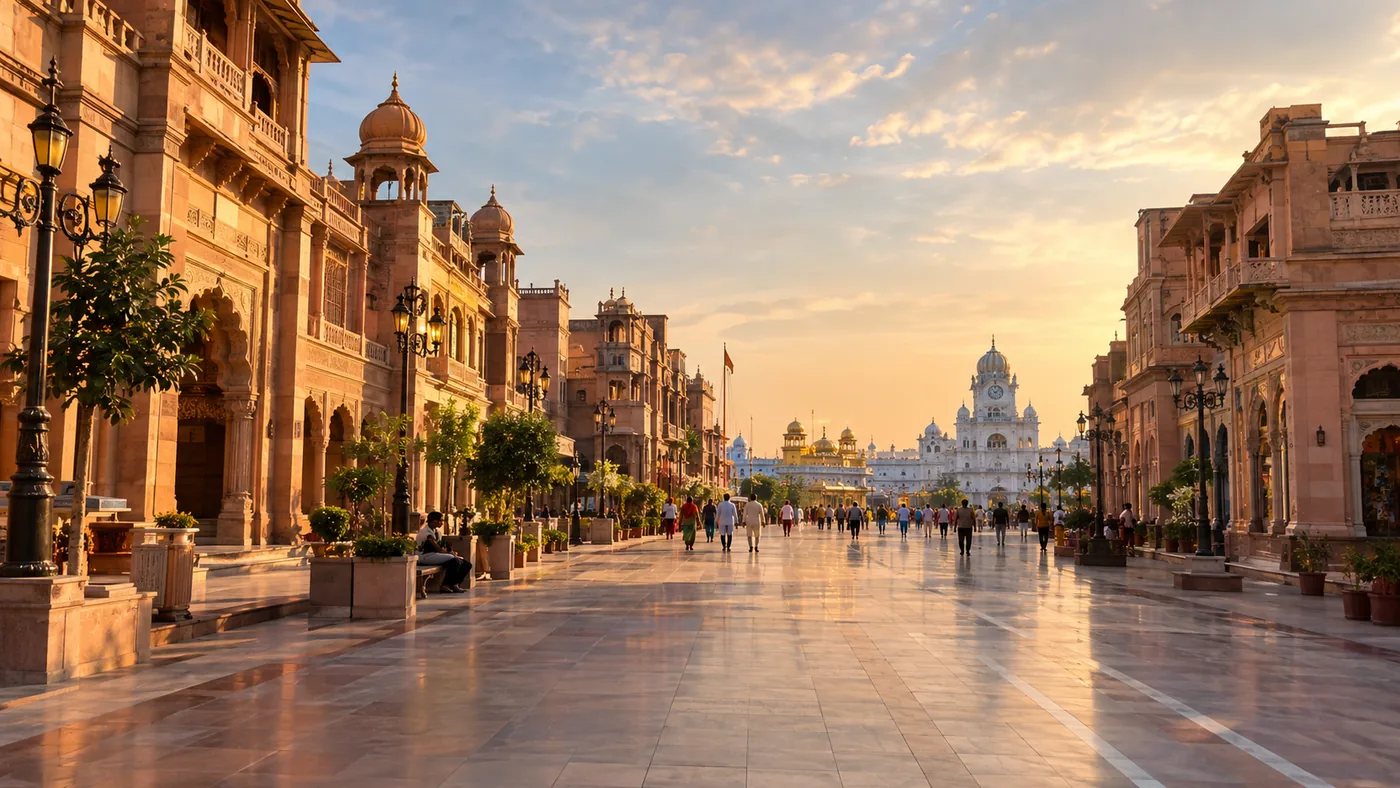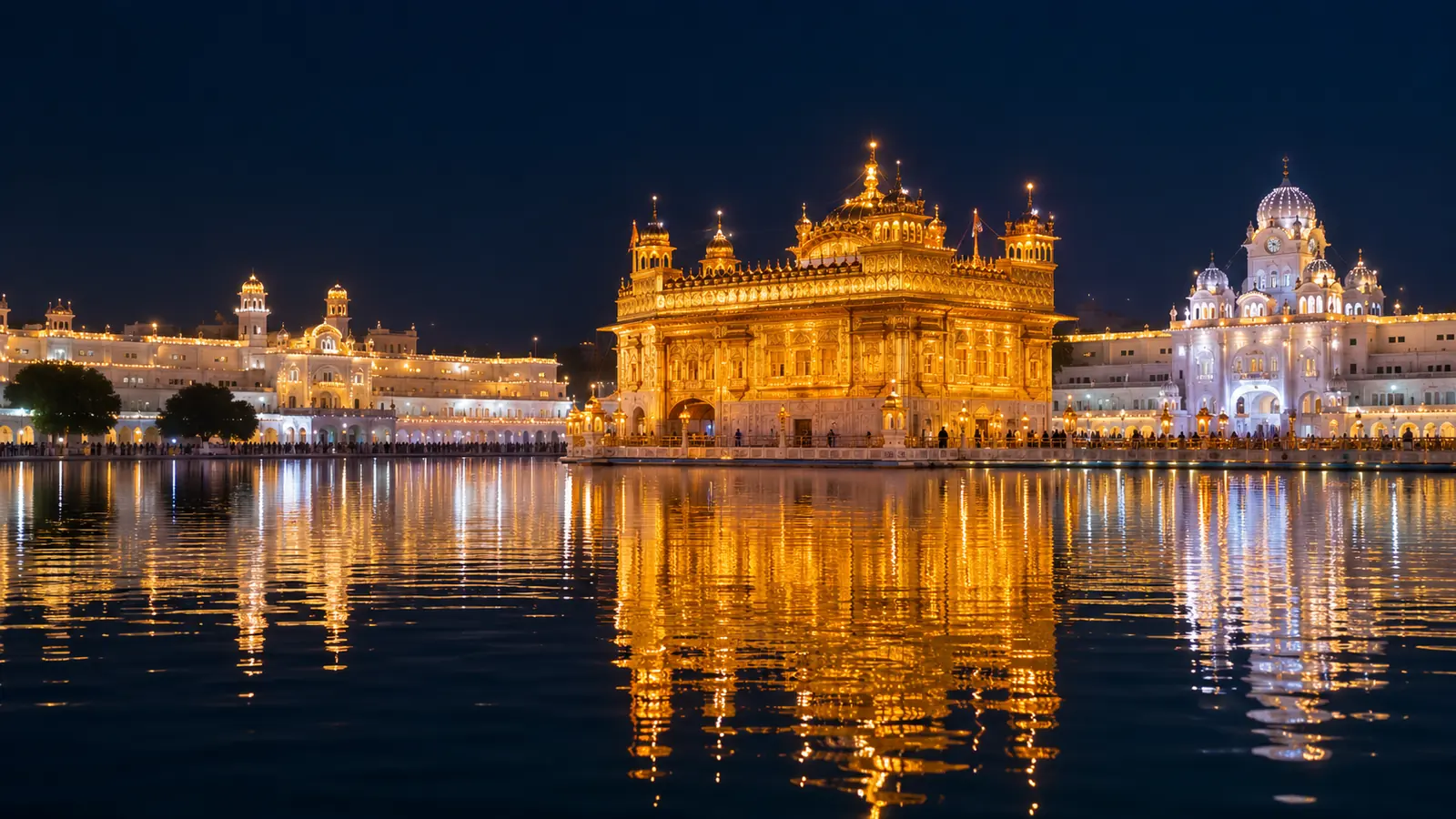
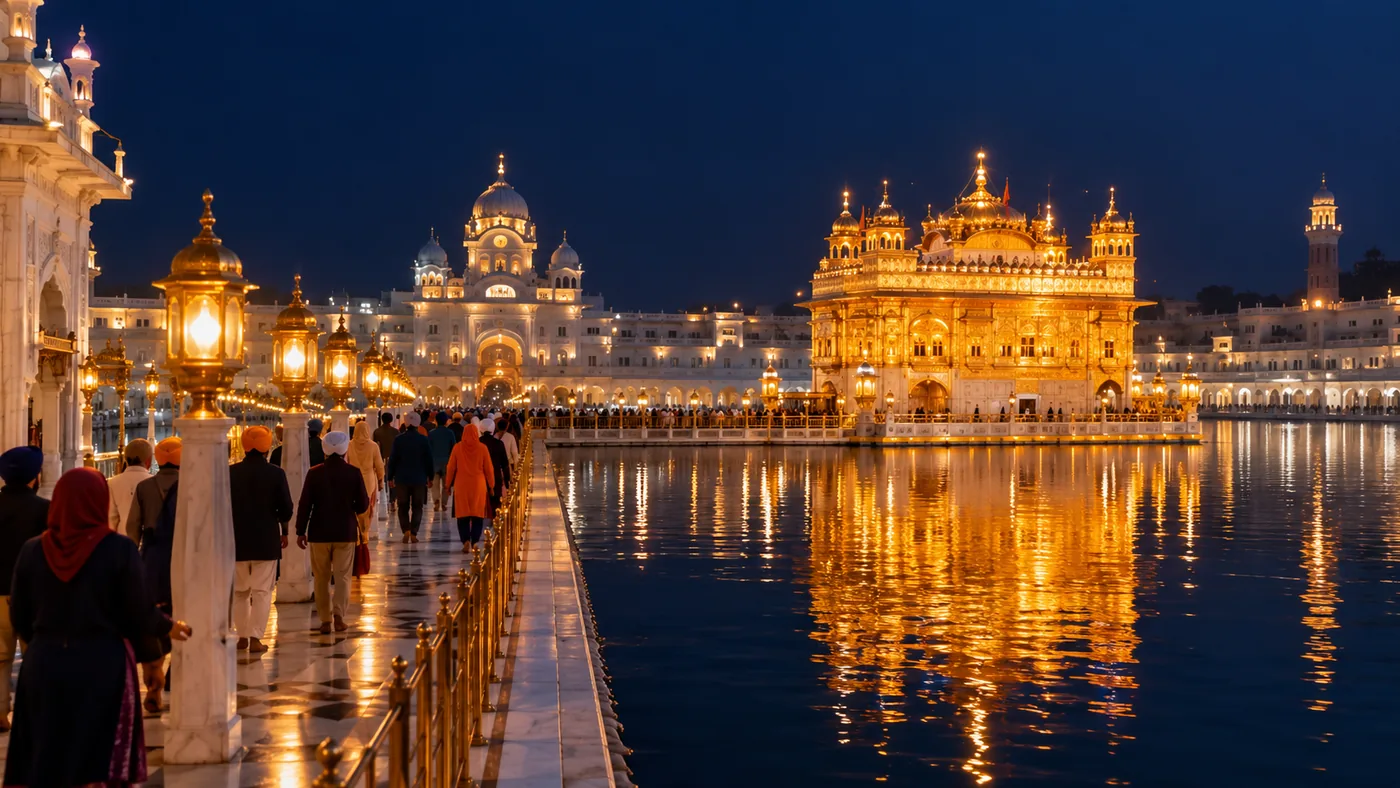
Booking choice: The Golden Temple night walk, ★ 4.9 (15). Check dates Compare the options below
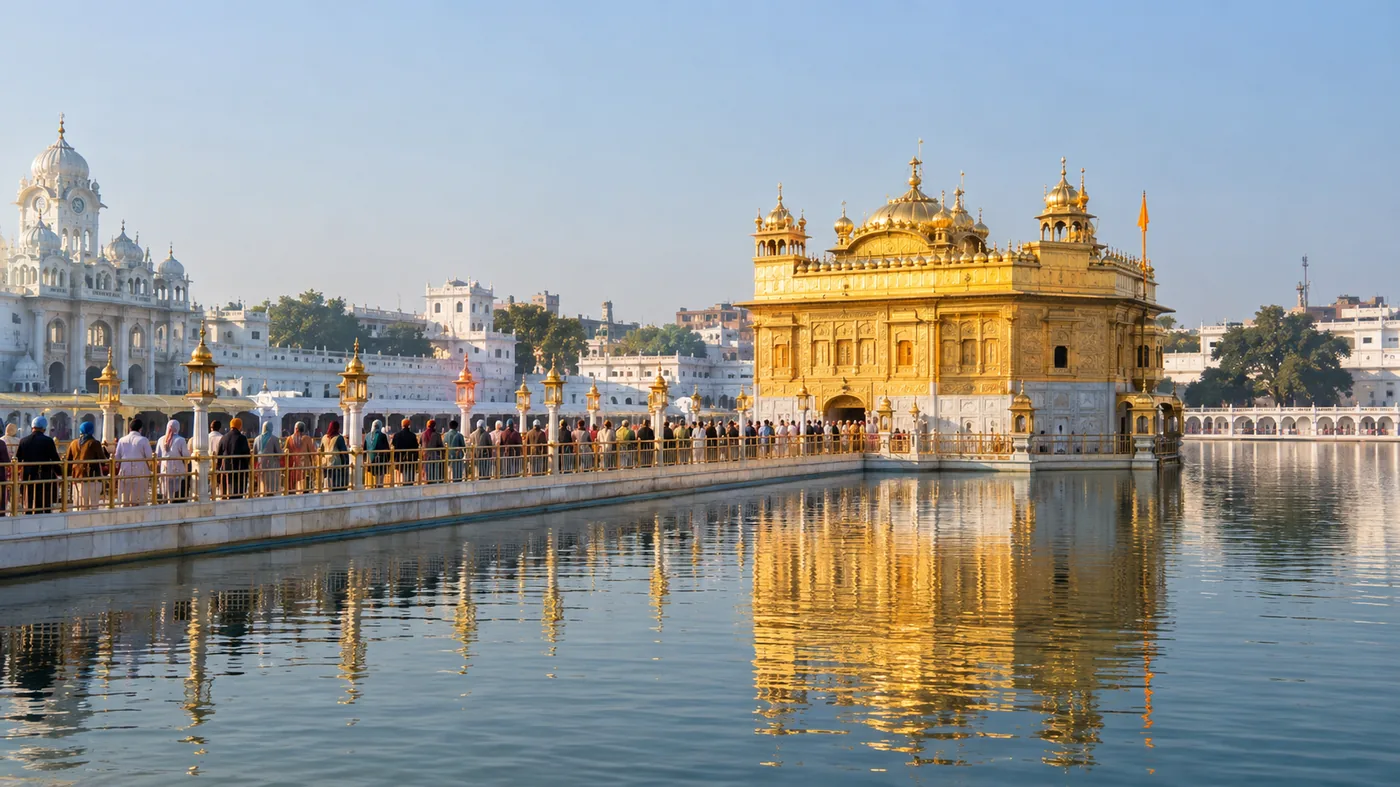
The Golden Temple has a daily rhythm that most day visitors never see. The Guru Granth Sahib, the Sikh scripture, is treated with the respect given to a living Guru. Each night it is carried to rest at the Akal Takht, the seat of Sikh temporal authority, which faces the temple across the causeway. Each morning it is carried back to the sanctum and opened. Between these two processions, kirtan (hymns) is sung in the sanctum without a break.
This guide follows one day at the temple hour by hour, explains the Palki Sahib procession and how to attend it respectfully, and covers the practical side: getting there at 3 am, where to stay and what to wear on cold marble. The rules on dress and photos are in the rules and dress code guide.
The quick answer
Times are approximate and shift with the season. The sanctum doors open at about 2 am in summer and 3 am in winter, and the early morning kirtan begins, followed about an hour later by the Asa di Var, the morning hymns. The Palki Sahib procession brings the Guru Granth Sahib from the Akal Takht to the sanctum at about 4 am in summer and 5 am in winter. Kirtan continues all day. Rehras Sahib, the evening prayer, is recited at sunset. At about 10:45 pm in summer and 9:45 pm in winter, the Sukhasan procession carries the scripture back to the Akal Takht. From about midnight to 1:30 am the sanctum is washed with water and milk, and then comes the one quiet stretch of the day before the doors open again. The walkway around the pool and the langar stay open throughout. To attend, cover your head, stand to the side of the route, keep your phone away and use no flash or video.
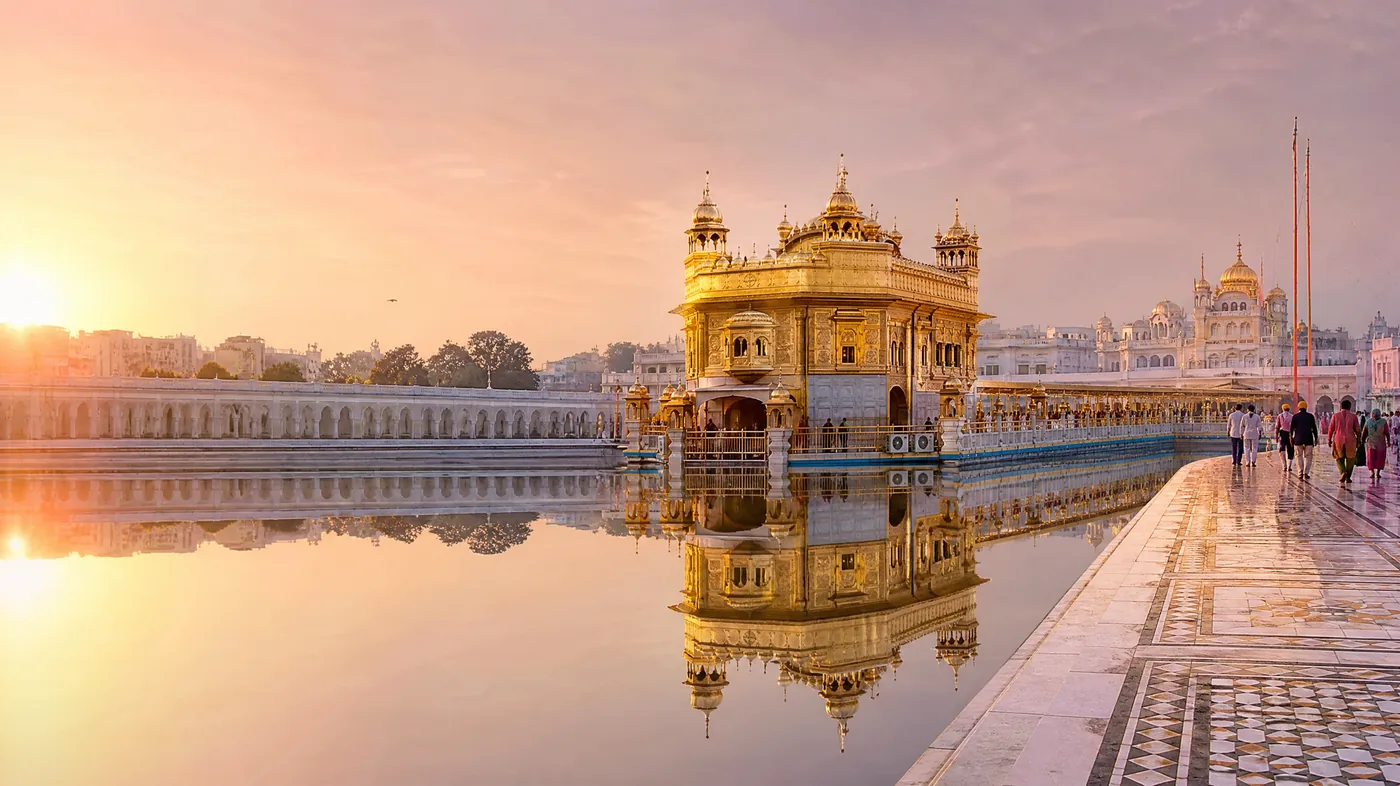
What happens at the Golden Temple at 3 am, hour by hour?
At 3 am in winter the sanctum doors open and the first kirtan of the day begins. In summer the doors have been open since about 2 am, and the Asa di Var is being sung. The Palki Sahib procession follows at about 4 to 5 am.
The table follows one full day, from the opening of the doors to the washing of the sanctum. The times are those commonly published for the temple's daily routine, and they move in small steps through the year, so treat them as a guide rather than a timetable. In spring and autumn they fall between the summer and winter columns.
| Time summer | Time winter | What happens |
|---|---|---|
| About 2 am | About 3 am | The doors (kiwad) of the sanctum open, and the early morning kirtan begins. |
| About 3 am | About 4 am | The Asa di Var, the morning hymns, begins. |
| About 4 am | About 5 am | The Palki Sahib procession carries the Guru Granth Sahib from the Akal Takht to the sanctum. |
| All day | All day | Kirtan is sung in the sanctum without a break and broadcast live. |
| Sunset | Sunset | Rehras Sahib, the evening prayer. |
| About 10:45 pm | About 9:45 pm | Sukhasan: the procession carries the Guru Granth Sahib back to the Akal Takht. |
| About midnight to 1:30 am | About midnight to 1:30 am | The sanctum is washed with water and milk. |
| From about 1:30 am | From about 1:30 am | The one quiet stretch of the day, with no kirtan, until the doors open again. |
See the temple after dark with a guide who explains its daily cycle: two hours on the lit walkway, then the old bazaars and a local snack.
Check dates for the Golden Temple night walkWhat is the Palki Sahib procession?
It is the moment each morning when the Guru Granth Sahib is carried in a golden palanquin, the palki, from the Akal Takht along the causeway into the sanctum, and opened for the day. At night the same procession takes it back.
Before dawn a crowd gathers along the route between the Akal Takht and the Darshani Deori, the gateway to the causeway. The scripture, wrapped in cloth, is brought out and placed in the palki. Devotees take turns to shoulder the palki, a few steps each, as it moves slowly towards the sanctum, and many consider carrying it even for a moment a great honour. The route is short, but the procession takes its time. In the sanctum the Guru Granth Sahib is installed and opened, and a passage is read aloud as the order of the day, the hukamnama.
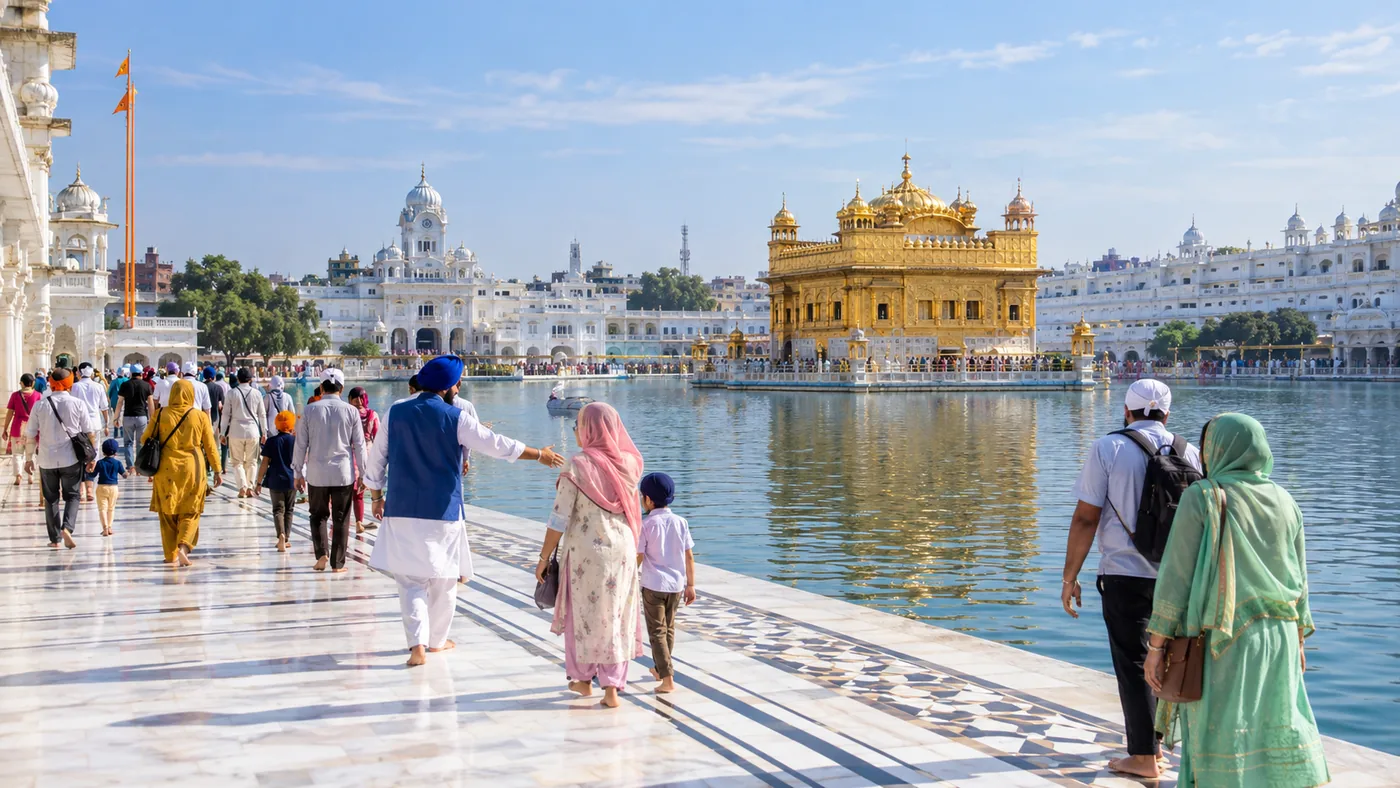
You hear the procession before you see it: the hymns, the voices, the crowd making room. It is an act of devotion, not a show put on for visitors, and the atmosphere is intense but calm. You can watch it pass from the walkway, walk behind it towards the causeway, or step back to the edge of the pool and watch from a distance.
What happens during the day and at sunset?
From the opening of the doors until Sukhasan, kirtan is sung in the sanctum without a break. At sunset the evening prayer, Rehras Sahib, is recited, and the temple begins to glow as the lights come on.
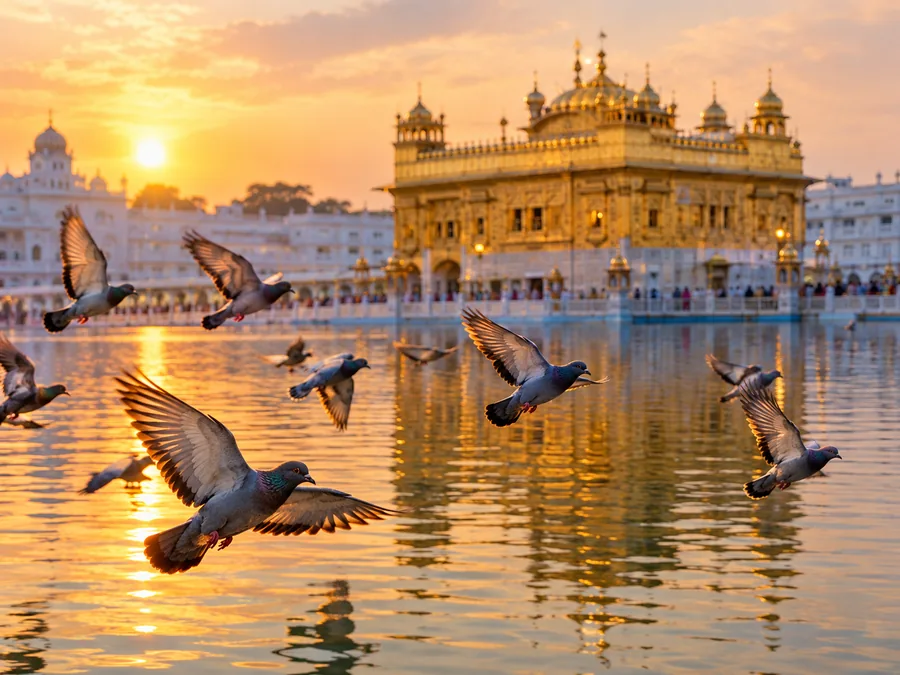
The daytime is when most visitors come and when the sanctum queue is longest. The hymns are relayed around the complex and broadcast live by the SGPC, so you hear them wherever you are on the walkway. Rehras is the prayer recited at dusk in every gurdwara. At the Golden Temple it marks the turn from day to evening: the light turns orange over the pool, and the crowd grows again as people come to see the temple lit.
If you can visit only once, sunset to about 9 pm is the most atmospheric window, busy but relaxed. The big screen on Heritage Street, near the Maharaja Ranjit Singh statue, shows the reading from inside, which helps if you arrive from the old city. The crowd pattern hour by hour is in how long a visit takes.
What is Sukhasan, the night ceremony?
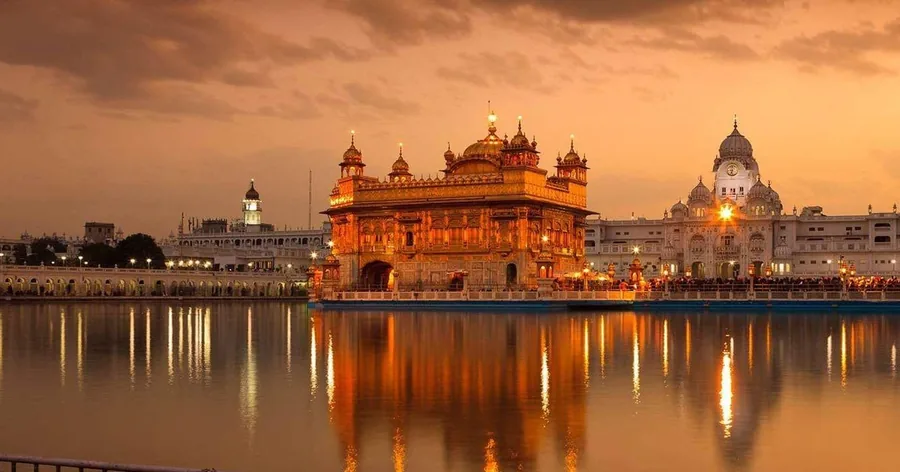
Sukhasan is the evening ceremony in which the Guru Granth Sahib is closed and carried from the sanctum back to the Akal Takht to rest for the night. It begins at about 10:45 pm in summer and 9:45 pm in winter, and is over by about 11 pm in summer and 10 pm in winter.
After the last hymns of the day in the sanctum, the scripture is closed, wrapped and placed in the palki. The procession crosses the causeway and the walkway to the Akal Takht, with devotees taking turns to carry it and hymns along the way. The temple is lit, the water is dark and still, and for most of the year the air is cool. Many visitors find this the most moving hour of the day, and it is easier to attend than the dawn procession because you do not need to be up at 3 am.
Arrive 30 to 45 minutes before the time and find a place along the route between the causeway and the Akal Takht, at the edge of the crowd rather than in the path. After the procession, the sanctum closes for the night and the crowd thins quickly. The walkway stays open, and you can stay as long as you like.
The evening Palki Sahib procession with a practising Sikh guide, the lit temple, a new head covering and jalebi from an old shop. Rated 5.0, from a single review so far.
Check dates for the night Palki ceremony tourWhy does the sanctum close at night, and what stays open?
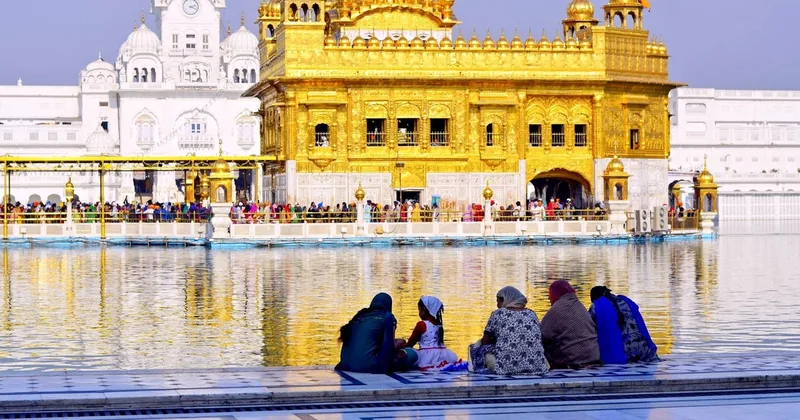
The sanctum closes after Sukhasan so it can be washed, roughly from midnight to 1:30 am, with water and milk. The complex never closes: the walkway around the pool and the langar stay open all night.
The washing, called ishnaan seva, is done by volunteers. Rugs, railings, flowers and the palki are taken out, and the sanctum is washed with water and milk. After the washing there is a short stretch with no kirtan, the only one in the day, until the doors open again at about 2 am in summer or 3 am in winter.
This is the best time to sit by the pool in near silence. A few pilgrims pray along the edge of the water, and the reflections are still. The langar keeps serving through the night, so you can eat at 1 am if you are hungry. Nothing more is asked of you than at any other hour: a covered head, bare feet and a quiet voice.
How do you attend the Palki Sahib procession respectfully?
Cover your head, stand to the side of the route, keep your phone in your pocket, and use no flash and no video. Walk with the procession if you are moved to, or step back and watch; both are fine.
- Where to stand: at the edge of the walkway along the route between the Akal Takht and the Darshani Deori, or on the far side of the pool for a wider, calmer view. Leave the centre clear: the procession needs room, and the crowd moves to make space.
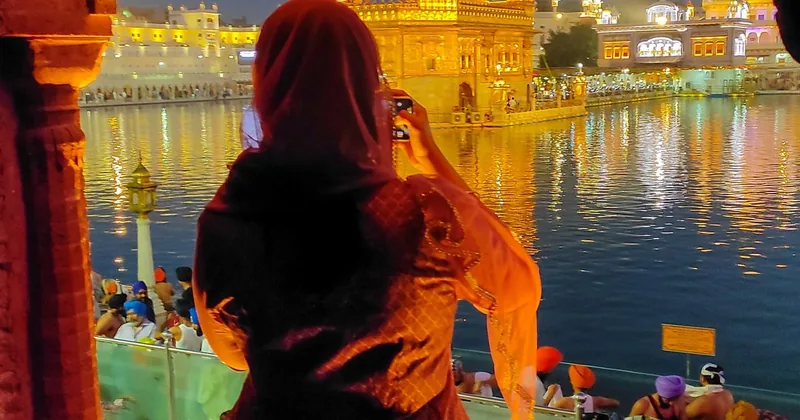
- Photos: no video and no flash. If you take one quick still photo from a distance on the walkway, take it and put the phone away. Many visitors choose not to photograph the procession at all.
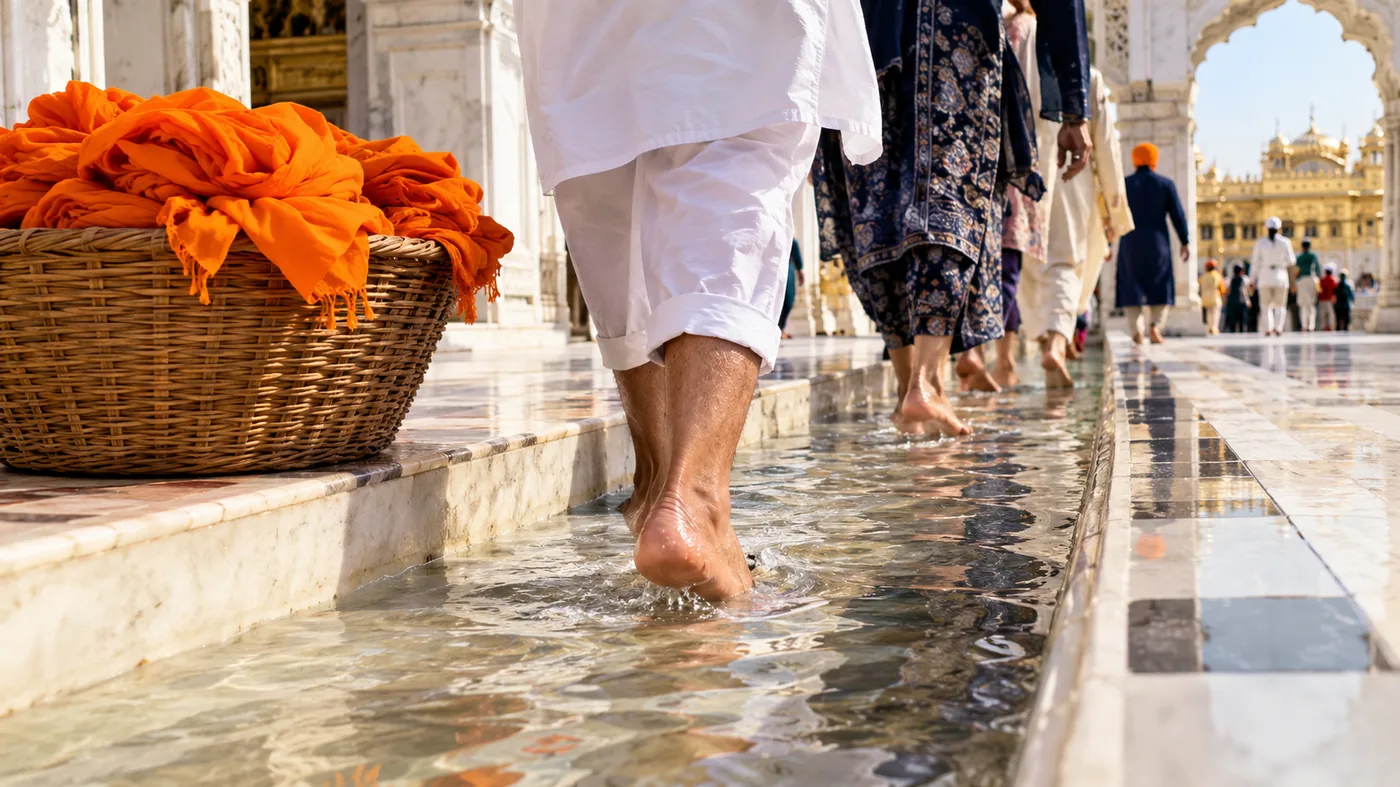
- Head and feet: a covered head and bare feet, as always. Tie your scarf firmly, as crowds can pull at it.
- Carrying the palki: devotees take turns to shoulder it for a few steps. Whether a visitor can take part depends on the moment and on the sewadars. Do not push forward to try, and if someone gestures you in, follow their lead.
- Crowds: the dawn procession draws a dense crowd. Keep children close and your valuables in a front pocket.
- Silence: speak softly or not at all; many people around you are praying.
If you are not sure what to do, stand still and let the procession pass. That is always respectful.
How do you get to the Golden Temple at 3 am?
The complex never closes, so you can walk in at any hour. From a hotel near Heritage Street it is a short walk; from further away, book an auto-rickshaw or a cab the evening before. SGPC runs round-the-clock shuttle buses for devotees from the railway station and the bus terminus.
- Stay close: the simplest plan is a room within walking distance. The SGPC's pilgrim guest houses (sarais) around the complex are booked only through the official SGPC sarai website; ignore anyone else offering them. Many hotels stand around Heritage Street and in the old city.
- By road: auto-rickshaws and cabs run at night, but fewer than by day, so arrange one through your hotel the evening before. Vehicles stop before Heritage Street, which is a pedestrian zone, so you walk the last stretch.
- From the station: Amritsar Junction is about 2 km away. The SGPC has run round-the-clock shuttle buses for devotees between the station, the bus terminus and the temple since 2017; ask at the station about the current service.
- What to wear: from November to February, average night lows are about 4 to 9 °C, and the marble is cold underfoot. Wear warm layers and a shawl; socks still come off at the joda ghar. From April to June the nights are warm.
- Shoes: the complex never closes, so you can hand your shoes to the volunteers at the joda ghar at any hour and keep the token.
The complex is lit and busy at every hour, with sewadars and the parikrama task force on duty. More on getting around after dark is in is the Golden Temple safe.
Prefer daylight for the stories? Two hours on foot with a storyteller: the Akal Takht, the langar kitchen behind the scenes and Jallianwala Bagh.
Check dates for the Golden Temple walkIs a night visit worth it, and which tours go at night?
Yes. The temple lit against the dark sky, the hymns across the water and the Sukhasan procession make the night the most atmospheric time to visit, and the marble is cool. You can go alone; a night tour adds the meaning and a guide through the old city.
The Golden Temple night walk (4.9 from 15 reviews) meets at the SureStay Heritage Walk hotel on Heritage Street, near Jallianwala Bagh. It spends two hours on the temple at night, Sikh history and customs, the old bazaars and a taste of local food. Reviewers mention good photo spots, and some saw the communal kitchen behind the scenes. Whether you see Sukhasan depends on the start time, so compare it with the season's time when you book. The night Palki ceremony tour is built around the evening procession, with a practising Sikh guide and a new head covering included. It is rated 5.0, but from only one review so far.
By day, the Golden Temple walk (4.9 from 29 reviews) and the new tour with a Sikh guide explain the same traditions and add the langar kitchen. None of the tours listed here starts at 3 am: for the dawn procession you go on your own, which is easy once you know the times. Every tour here gives a full refund if you cancel up to 24 hours ahead, and the tours compared lists them all.
A daytime visit with a Sikh guide: the walk around the pool, a meal in the langar hall and the kitchen behind it, in 2.5 hours from the main entrance. It is a new listing, so there are no reviews yet.
Explore the tour with a Sikh guideFrequently asked questions
Can tourists watch the Palki Sahib ceremony?
Yes. Anyone may watch, at dawn or at night, with a covered head and bare feet. Stand to the side of the route and take no video or flash photos.
Which is easier to attend, the dawn or the night procession?
The night procession, Sukhasan, at about 9:45 pm in winter and 10:45 pm in summer, because you do not need to be at the temple by 4 or 5 am. The dawn procession has the advantage of a short sanctum queue afterwards.
Is the Golden Temple open at 3 am?
Yes. The complex never closes, and at 3 am in winter the doors of the sanctum open for the day. In summer they open at about 2 am.
Can I hear the ceremonies online?
Yes. The SGPC broadcasts the kirtan from the sanctum live on its official website, sgpc.net, which is a good way to hear the daily cycle before you go.
Ready to book
Choose your tour
Check your date and the live price on GetYourGuide; the refund terms are shown on each option.
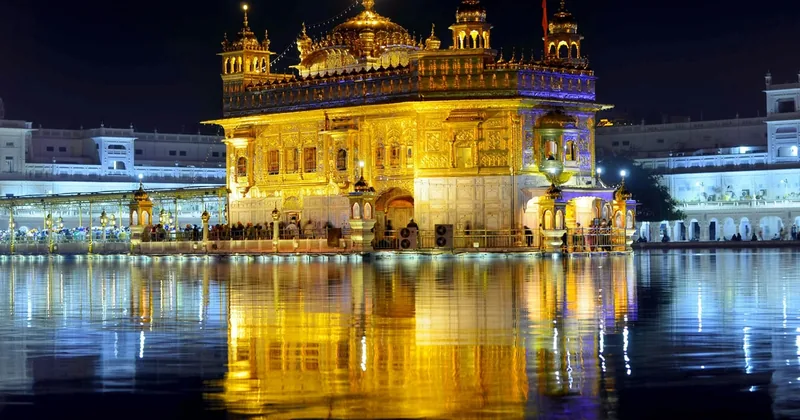
Golden Temple Night Walk
- The Golden Temple at night with a guide
- Sikh history and customs explained as you walk
- The old bazaars around the temple
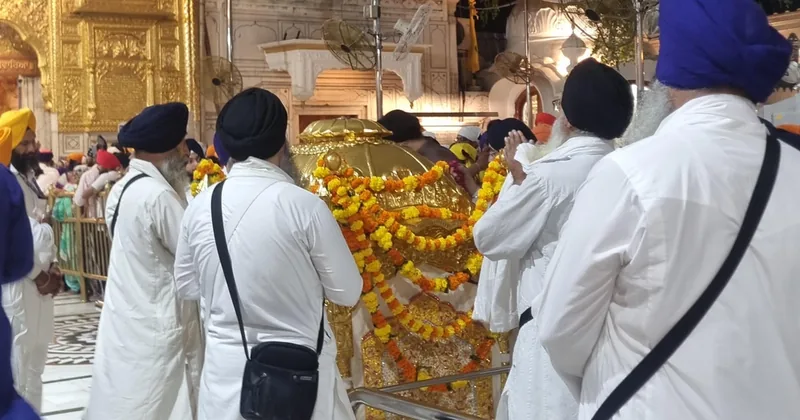
Night Palki Ceremony Tour
The evening Palki Sahib procession with a Sikh guide, a head covering included
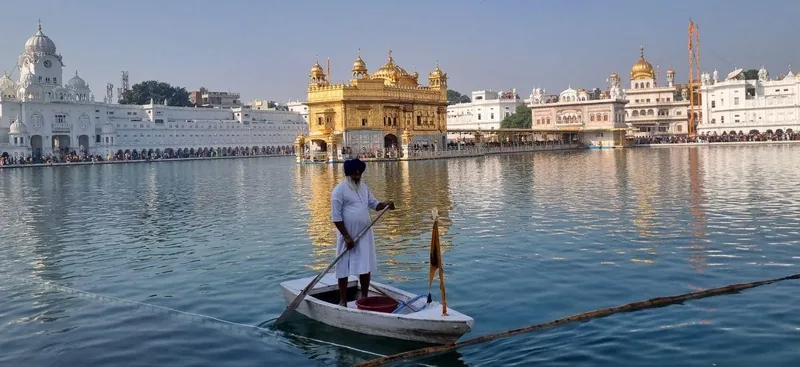
Golden Temple & Jallianwala Bagh Walk
- A guided walk around the Golden Temple complex
- The Akal Takht and the story of the Sikh Gurus
- The langar kitchen behind the scenes