Booking choice: The Golden Temple walk, ★ 4.9 (29). Check dates Compare the options below
The Golden Temple, Sri Harmandir Sahib, is a gurdwara: a Sikh place of worship, and the most important one. The rules for visitors are much the same as in any gurdwara, and they are simple. They exist out of respect for the Guru Granth Sahib, the Sikh scripture, which is present in the sanctum, and for the people who come to pray. Nobody expects you to know everything. The sewadars and the parikrama task force who look after the complex will guide you gently if something is not right.
This guide goes through each rule in the order you meet it: at the entrance, on the walkway around the pool, in the sanctum and in the langar. It answers the questions visitors ask most, from jeans and black clothes to socks, bags, phones and photos. How long each part of the visit takes is in how long a visit takes.
The quick answer
Everyone covers their head, men, women and children, with a scarf, a dupatta, a bandana-style cloth or a turban; scarves are available at the entrances if you forget yours. Shoes and socks come off: hand your shoes to the volunteers at the joda ghar and keep the token. You wash your feet in the shallow channel at the entrance. Dress modestly, with shoulders and legs covered. Clean, untorn jeans are generally accepted, and there is no colour rule, so black is fine. Tobacco, alcohol and intoxicants are not allowed, not even in a bag. Keep your phone on silent. Quick still photos on the walkway around the pool are tolerated; no videos, no photos inside the sanctum, and follow the sewadars' instructions. Sit on the marble with your legs folded, and do not stretch your feet towards the sanctum. People of every faith are welcome.
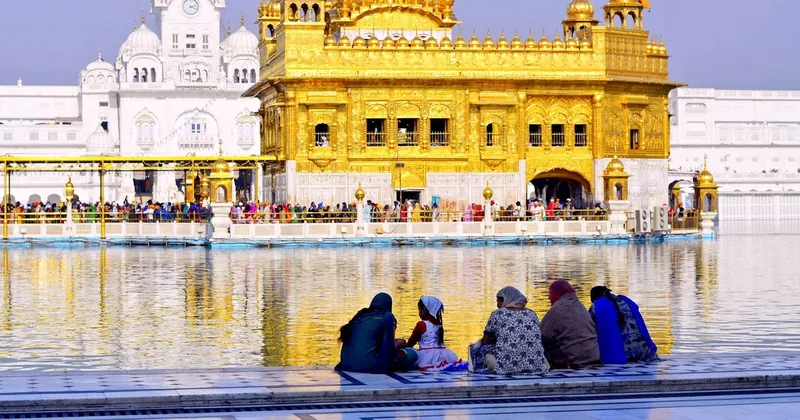
What are the main rules for visiting the Golden Temple?
Cover your head, remove your shoes and socks, wash your feet, dress modestly, bring no tobacco, alcohol or intoxicants, keep your phone silent and take no videos. The table sums up what is allowed.
These rules come from the SGPC, which manages the temple, and they apply to everyone, Sikh or not. A few details, such as jeans or the colour of your clothes, are not written rules at all. For those, the table gives the common practice.
| Item or action | Allowed? | Note |
|---|---|---|
| Uncovered head | No | Everyone covers their head; scarves are available at the entrances. |
| Shoes | No | Hand them to the volunteers at the joda ghar and keep the token. |
| Socks | No | SGPC guidance: remove them too and walk barefoot. |
| Shorts, short skirts, sleeveless tops | Best avoided | Shoulders and legs should be covered. |
| Clean, untorn jeans | Generally accepted | There is no official rule either way. |
| Black or any other colour | Yes | There is no colour rule; black is fine. |
| Tobacco, alcohol, intoxicants | No | Not even in a pocket or a bag. |
| Large bags | Best left behind | Bring a small bag; you walk barefoot for hours. |
| Phone | Yes, on silent | Avoid calls, and take no videos. |
| Still photos on the walkway | Tolerated | Quick photos only; follow the sewadars' instructions. |
| Photos inside the sanctum | No | Keep your phone away in the sanctum. |
| Swimming in the pool | No | The sarovar is a holy pool; devotees take a ritual dip at the designated steps. |
| Visitors of any faith | Yes | The four doors are open to everyone. |
Two hours with a storyteller who explains each custom as you meet it, from the joda ghar to the Akal Takht and the langar kitchen behind the scenes.
Check dates for the Golden Temple walkDo you have to cover your head and take off your socks?
Yes to both. Everyone covers their head with a cloth, and SGPC guidance asks you to remove your socks as well as your shoes and walk barefoot.
Your head: a scarf, a dupatta, a bandana-style cloth or a turban all work, in any colour. It should cover your hair, and it is appreciated if you keep it on for the whole visit, including in the langar. Scarves are available at the entrances if you forget yours, and stalls on the way to the temple sell them too. Caps and hats are not the usual practice, so bring a cloth. Children cover their heads as well.
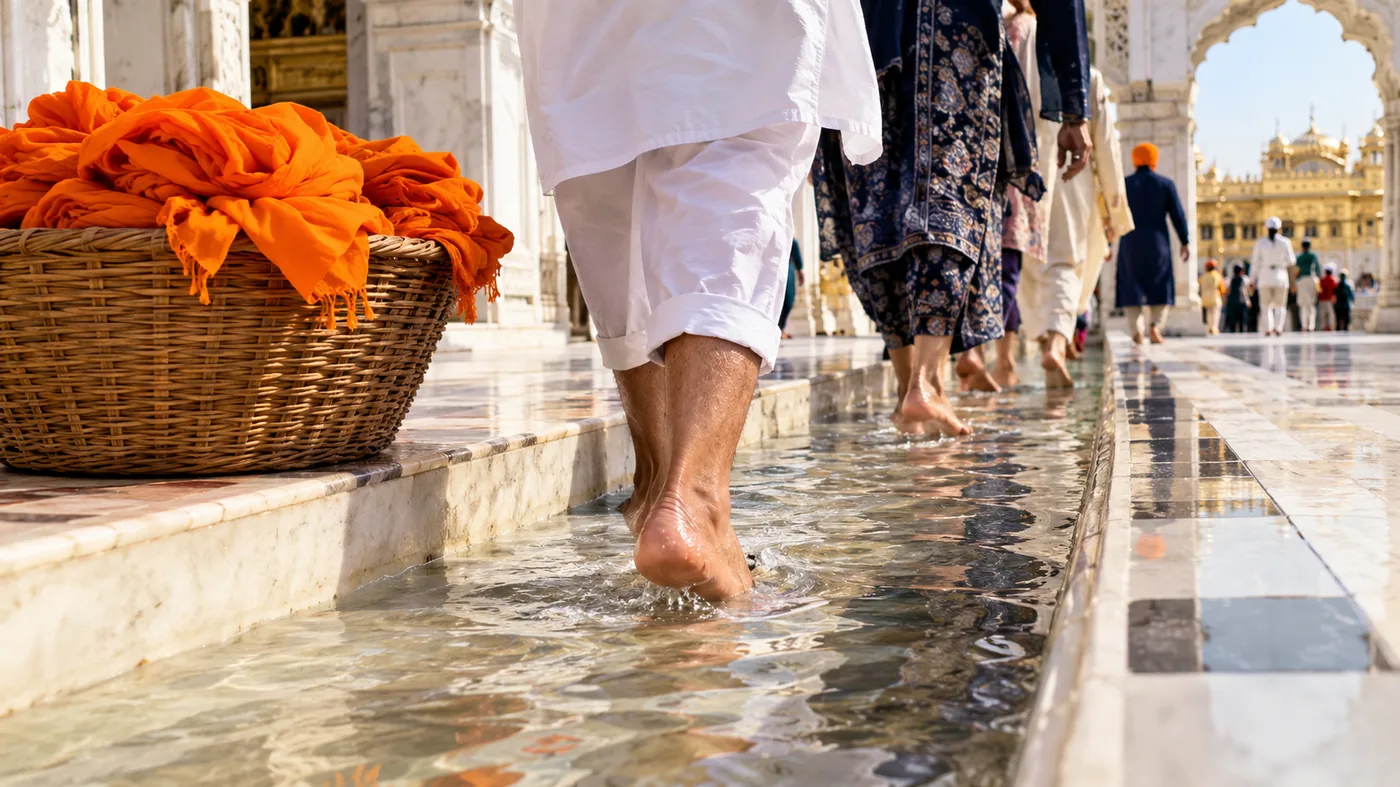
Your feet: hand your shoes and socks to the volunteers at the joda ghar and keep the token. Wash your hands, then walk through the shallow channel of water that washes your feet before you enter. You may read online that socks are fine on the walkway, but the SGPC's own guidance says barefoot. In summer the marble gets hot in the afternoon, and jute mats are laid on the walkway; before dawn in winter it is cold, so dress warmly and bring a shawl instead.
What is the dress code for ladies at the Golden Temple, and can I wear jeans or black?
There is no special dress code for women beyond modesty and a covered head: clothes that cover the shoulders and legs and are not tight or revealing. For everyone, clean, untorn jeans are generally accepted, and black is fine.
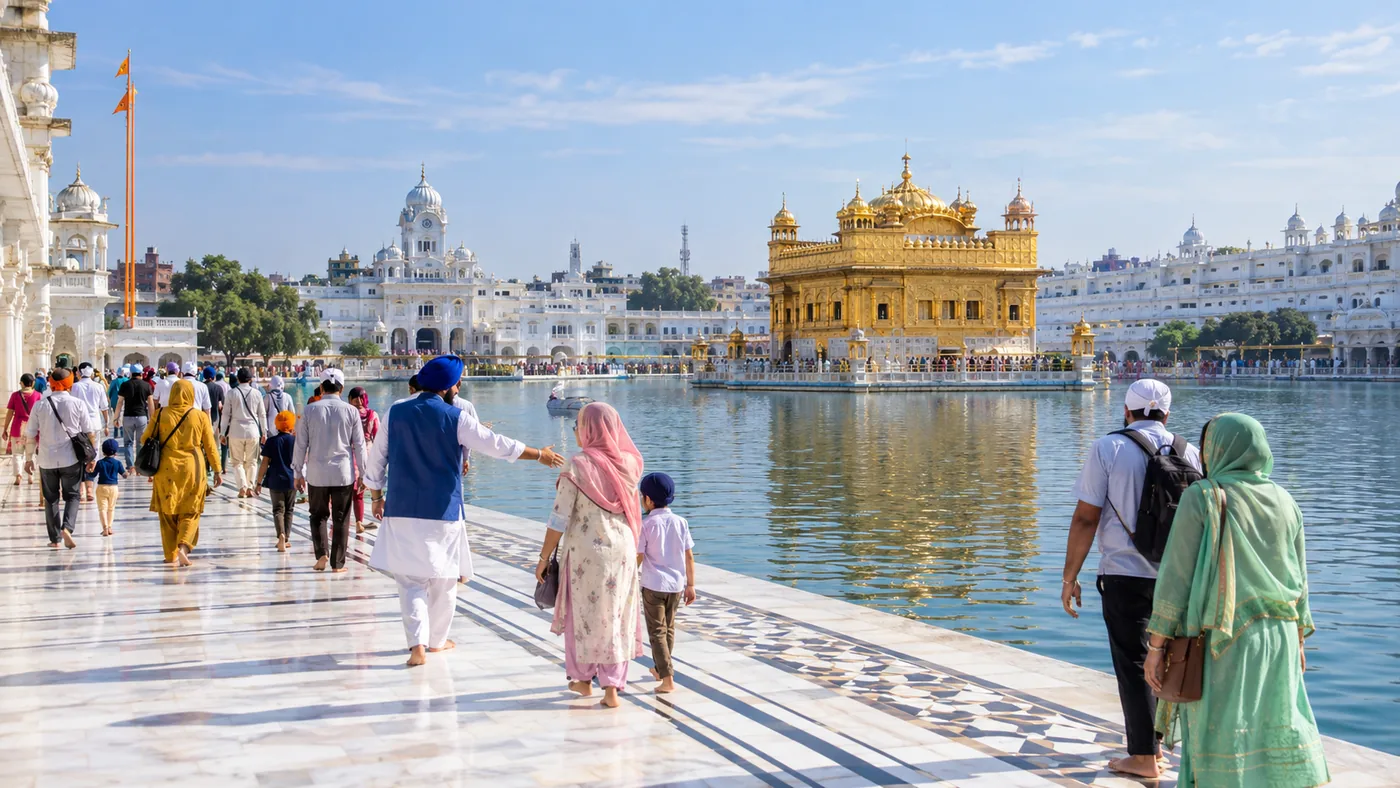
- Women: a salwar kameez with a dupatta is ideal, and the dupatta covers your head. A long skirt or loose trousers with a top that covers the shoulders work just as well. Avoid shorts, short skirts, sleeveless tops and very tight outfits.
- Men: long trousers and a shirt or T-shirt; avoid shorts and vests. Use a scarf or a bandana-style cloth for your head.
- Jeans: there is no official rule, and clean jeans without rips are generally accepted, like any long trousers. Leave ripped jeans at the hotel.
- Black: there is no colour rule at the Golden Temple, so black clothes and a black scarf are fine.
- Children: the same modesty, and a covered head.
Visitors often ask about other temples too. Is it okay to wear black to a Hindu temple? Generally yes: there is no universal ban, and at Sabarimala in Kerala pilgrims traditionally wear black. What does a woman wear to a Buddhist temple? Clothes that cover the shoulders and knees, and some sites, such as the Grand Palace in Bangkok, are stricter still. The Golden Temple is a Sikh gurdwara, not a Hindu or Buddhist temple. It asks for the same modesty, plus two things of its own: a covered head and bare feet.
A new tour with a Sikh guide: the walk around the pool, a meal in the langar hall and the kitchen behind it, with each custom explained. No reviews yet.
Check dates for the tour with a Sikh guideWhat is the 3-3-3 rule for clothes, and how do you use it for Amritsar?
The 3-3-3 rule is a capsule-wardrobe packing rule: three tops, three bottoms and three pairs of shoes that all mix and match. It has nothing to do with the temple, but it works well for a trip to Amritsar if you choose the pieces with the temple in mind.
- Three tops that cover your shoulders: loose cotton from April to September, with a warm layer for December and January mornings.
- Three long bottoms: loose trousers, a long skirt or clean jeans.
- Three pairs of shoes, at least one of them slip-on, because you take them off and put them back on at the joda ghar.
- Plus a scarf or two, large enough to cover your head, and a small bag.
Nine pieces give you up to 27 combinations, which is more than enough for two or three days. If you plan to see the border ceremony at Attari, note that bags are not allowed there, so keep your passport and phone in your pockets. The weather month by month is in the best time to visit.
What is not allowed inside the Golden Temple?
Tobacco, cigarettes and bidis, alcohol and other intoxicants are not allowed anywhere in the complex, not even in a pocket or a bag. Videos are not allowed, and nothing should pollute the pool, which is holy water.
- Tobacco, alcohol and intoxicants: strictly prohibited, including in bags. Since a Punjab government notification of 15 December 2025, the walled city around the temple is a holy city, and the sale of meat, alcohol, tobacco and intoxicants is banned there, so do not expect to buy them nearby.
- Food: the langar serves vegetarian food only.
- Large bags: there is no bag check at the door, but you carry everything barefoot for hours. Larger bags can be left at a gathri ghar (cloakroom), but the simplest plan is to bring only a small bag.
- The pool: the sarovar is a holy pool. Devotees take a ritual dip at the designated steps; it is not a place to swim, and nothing should be thrown into the water.
- Stunts and shoots: the SGPC has banned promotional shoots and videos, and in 2024 a posed photo on the walkway led it to file a police complaint. Quiet, respectful behaviour is expected everywhere.
- Running, pushing and loud voices: speak softly, and let the line move at its own pace.
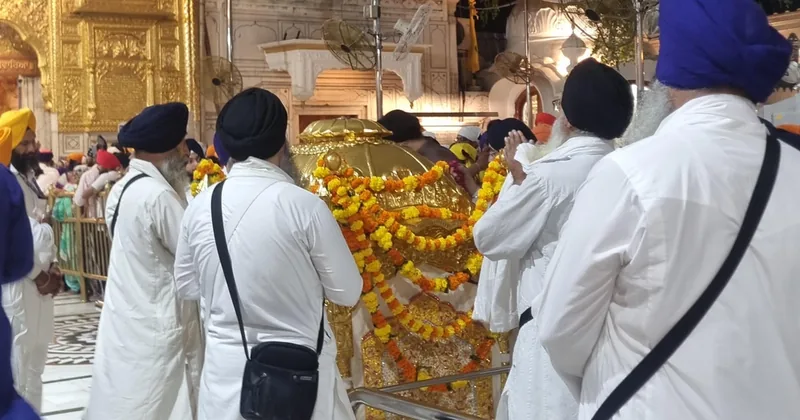
The evening Palki Sahib procession with a practising Sikh guide who explains each step, the temple lit up, a new head covering included and jalebi from an old shop. Rated 5.0, but from only one review so far.
Explore the night Palki ceremony tourAre phones and photos allowed inside the Golden Temple?
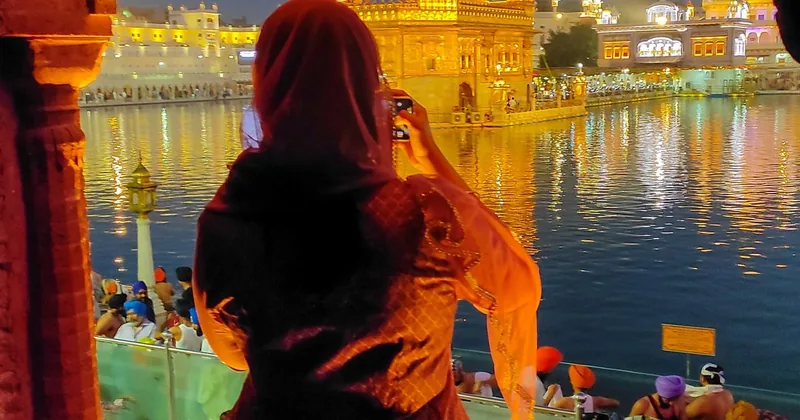
Phones are allowed, but keep them on silent and use them as little as possible. Quick still photos on the walkway around the pool are tolerated; no videos, no photos inside the sanctum, and follow the sewadars' instructions.
The SGPC's written rules once said photography was prohibited. In July 2024 it decided that devotees may take still photos and selfies on the parikrama, the walkway around the pool, as a keepsake, but must not film videos, and it enlarged the task force that looks after the walkway. In practice, a quick photo of the temple across the water is fine. Filming, setting up a tripod or posing for a long shoot is not, and photographing people at prayer close up is best avoided.
In the sanctum, keep your phone in your pocket. Many visitors find the walk along the causeway, the hymns and the moment inside better without a screen. If a sewadar asks you to put your phone away, do so with a nod: they ask out of respect for the place. The lit temple at night is the favourite view from the walkway, and the times of the night ceremony are in the dawn and night guide.

Can Muslims and people of other faiths go inside the Golden Temple?
Yes. The temple is open to people of every faith and of none. Its four doors, one on each side, are a sign that everyone is welcome.
Muslims, Hindus, Christians, Buddhists, Jews and non-believers may all enter, walk around the pool, queue for the sanctum and eat in the langar, following the same rules of dress and behaviour as everyone else. Nobody asks your religion at the door. According to the SGPC, the foundation stone of the temple was laid by Mian Mir, a Muslim Sufi saint from Lahore, and the langar seats people side by side regardless of religion, caste or gender. You do not need to take part in any prayer. Many visitors of other faiths sit quietly by the pool and listen, and that is a respectful way to share in the place.
If you want to understand what you are seeing, a guide helps. The tour with a Sikh guide is a new listing with no reviews yet, while the Golden Temple walk has a 4.9 rating from 29 reviews.
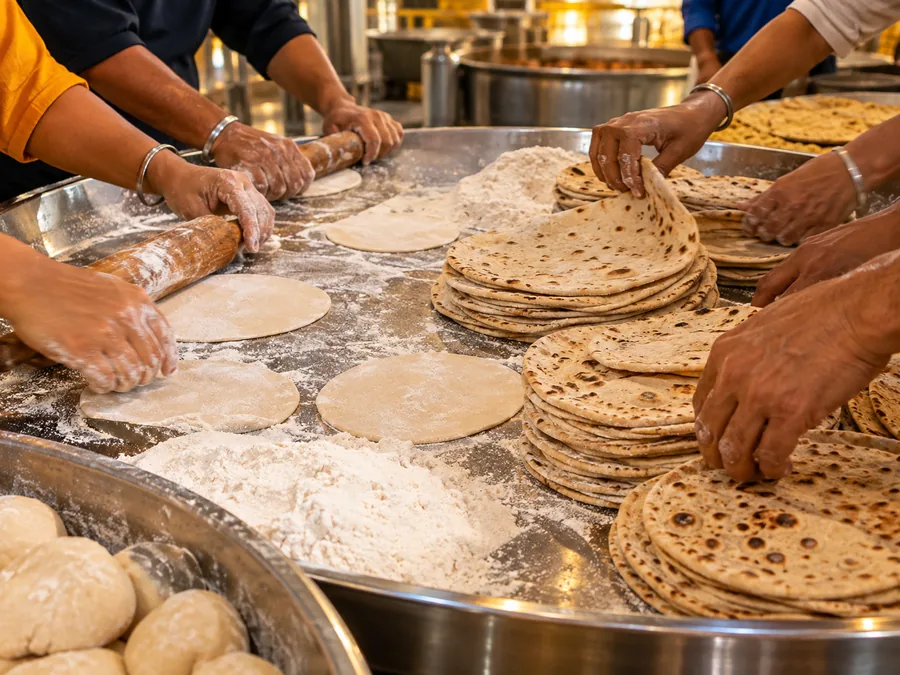
How should you sit, eat in the langar and receive karah prasad?
Sit on the marble with your legs folded and your feet away from the sanctum. In the langar, sit in the row, hold out both hands for the roti and eat what you take. Receive karah prasad in both cupped hands.
- Sitting by the pool: sit cross-legged or with your legs folded to one side. Stretching your legs out towards the sanctum is considered disrespectful, so turn to the side if you need to stretch. Keep the walkway clear for people walking around.
- In the langar: take a plate, a bowl and a spoon from the volunteers, then sit down in the row where you are shown, on the floor mats. Hold out both hands, palms up, when a volunteer offers you a roti. Take only what you will eat; you can always ask for more, and it is appreciated if nothing is wasted. Hand back your plate at the washing area as you leave.
- Helping: you are welcome to roll rotis, peel vegetables or wash dishes for a while. Ask a volunteer where help is needed.
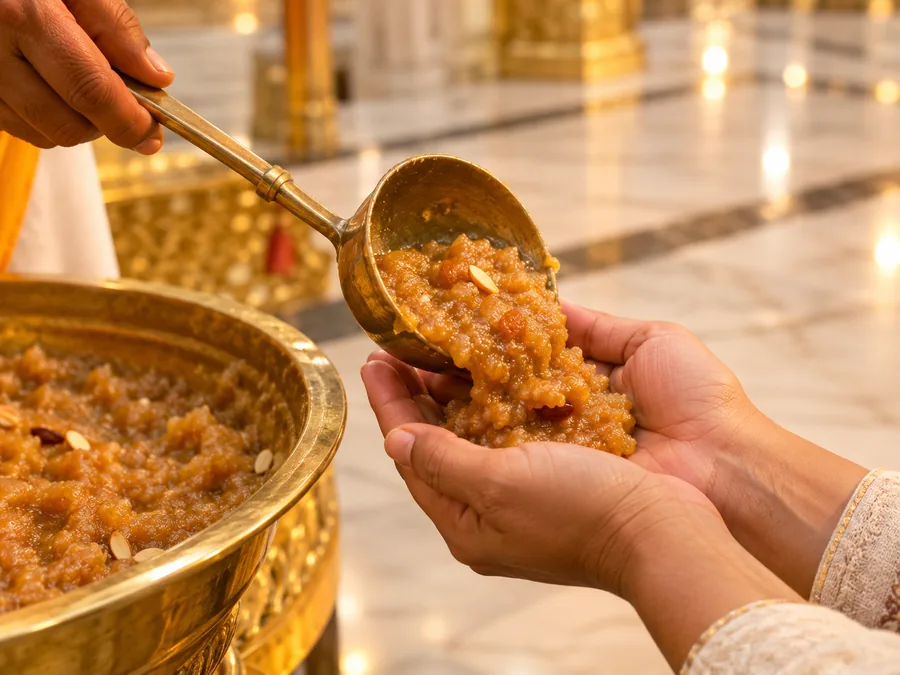
- Karah prasad: a sweet offering made of wheat flour, ghee and sugar. Hold out both hands, cupped together, and eat it rather than throw it away; if it is too much, share it.
- In the sanctum: keep moving with the line, bow if you wish, and do not stop in the doorway.
None of this is a test. Sewadars see thousands of first-time visitors every day and are patient with mistakes, and watching the person next to you works well.
See the customs at work after dark, when the temple is lit and the marble is cool: a two-hour night walk with a guide, then the old bazaars.
Check dates for the Golden Temple night walkFrequently asked questions
Can I wear a cap or a hat in the Golden Temple?
A cloth covering is the usual practice: a scarf, a dupatta, a bandana-style cloth or a turban. Bring a scarf rather than relying on a cap. Scarves are available at the entrances if you forget yours.
Can I bring a bag into the Golden Temple?
A small bag is fine. Leave large bags at your hotel, because you carry everything barefoot for hours, and make sure there is no tobacco or alcohol inside.
Do I have to eat in the langar?
No, but everyone is welcome, and for many visitors it is the most memorable part of the day. Sit down in the rows and a meal is served to you, whoever you are.
Can I take a dip in the sarovar?
The sarovar is a holy pool where devotees take a ritual dip at the designated steps as an act of devotion. It is not a place to swim. If you are not there to pray, it is best to simply sit by the water.
Ready to book
Choose your tour
Check your date and the live price on GetYourGuide; the refund terms are shown on each option.

Golden Temple & Jallianwala Bagh Walk
- A guided walk around the Golden Temple complex
- The Akal Takht and the story of the Sikh Gurus
- The langar kitchen behind the scenes
Behind the Scenes with a Sikh Guide
The walk around the pool with a Sikh guide, a meal in the langar hall and the kitchen behind it
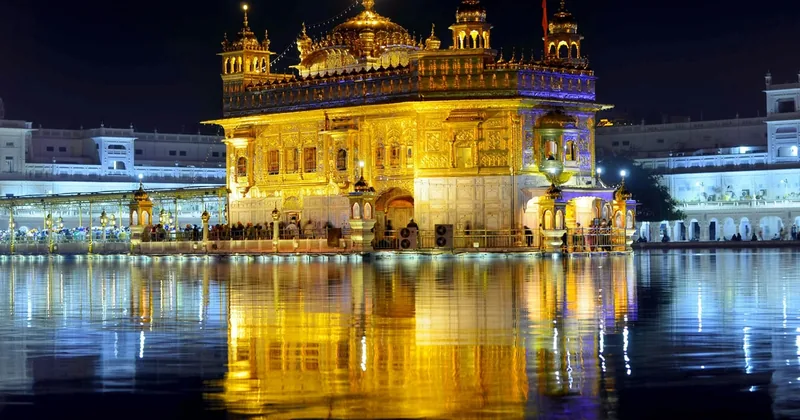
Golden Temple Night Walk
- The Golden Temple at night with a guide
- Sikh history and customs explained as you walk
- The old bazaars around the temple