Booking choice: The Golden Temple walk, ★ 4.9 (29). Check dates Compare the options below
There is no ticket for the Golden Temple and no time slot. Anyone can walk in, day or night, and nobody checks how long you stay. That makes planning easy in one way and hard in another: the visit takes as long as the parts you choose. Some people spend 90 minutes walking around the pool and leave deeply moved. Others queue for the sanctum, eat in the langar, visit the museum and come back after dark.
This guide breaks the visit into its parts, shows when the queue for the sanctum is shortest, and gives sample plans for two hours, half a day and a full day. It ends with the question of how many days to give Amritsar. What to wear and bring is in the rules and dress code guide, and the best months are in the best time to visit.
The quick answer
For the temple alone, allow two to four hours. The fixed parts are short: 10 to 15 minutes for shoes, head covering and the foot wash, about an hour for a slow walk around the pool with stops, 30 to 45 minutes in the langar, and a few minutes for karah prasad (a sweet offering). The variable part is the sanctum. On a normal day the line along the causeway takes two hours or more, and longer on Sundays, public holidays and festivals. It is shortest before dawn, after the doors open at about 2 am in summer and 3 am in winter, and late in the evening. Skipping the sanctum is a common and respectful choice, and it brings a visit down to about 90 minutes to two hours. For Amritsar, one full day covers the temple, Jallianwala Bagh and the border ceremony at a push. Two days lets you see the temple by day and by night, add the Partition Museum (closed on Mondays) and Heritage Street, and rest in between.
How much time does it take to see the Golden Temple?
About two to four hours for a first visit, depending on the sanctum queue. Without the sanctum, 90 minutes to two hours is enough to walk around the pool, sit for a while and eat in the langar.
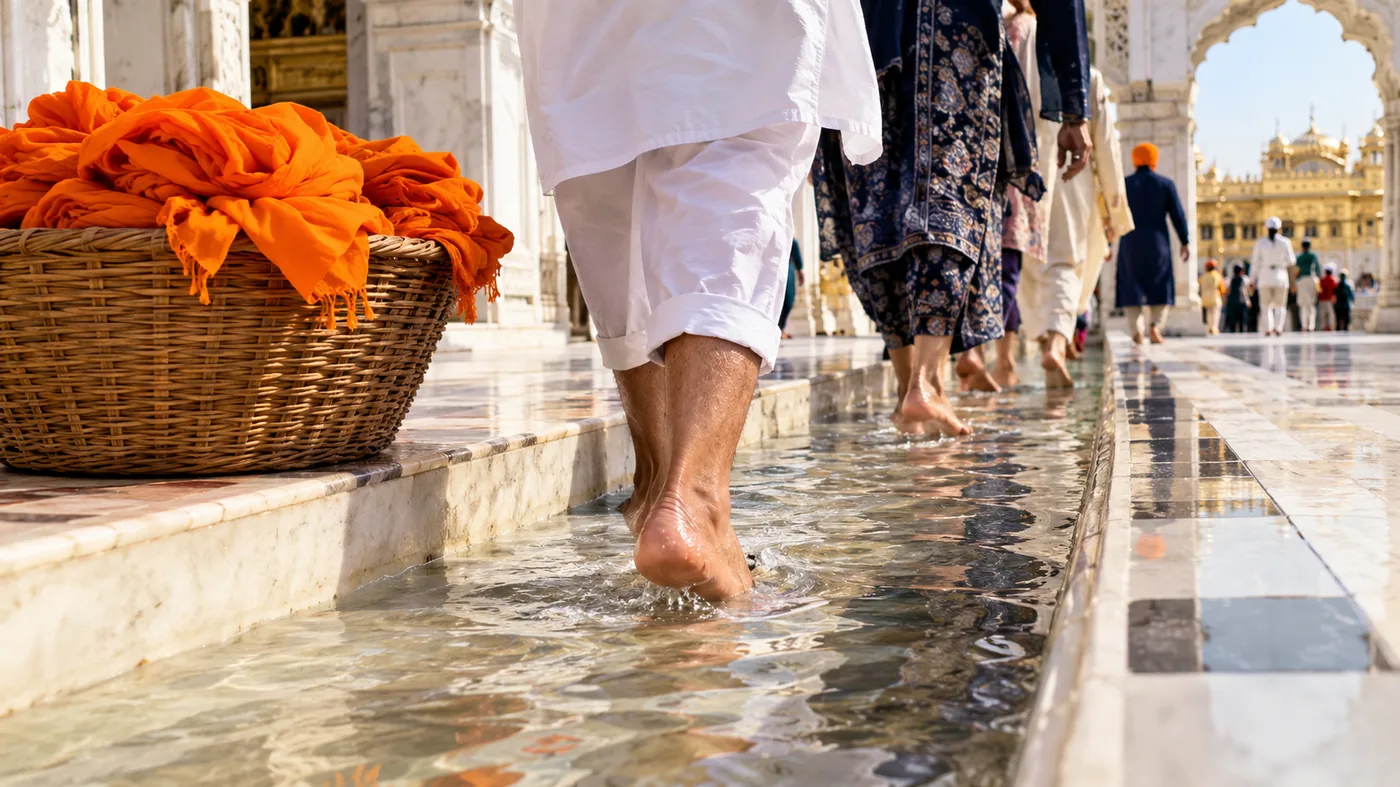
A visit follows the same order at any hour. You leave your shoes at the joda ghar, cover your head, wash your feet in the shallow channel at the entrance and walk down the steps to the marble walkway around the pool. From there you choose: walk around the pool, join the line to the sanctum, eat in the langar, or all three. The table shows how long each part usually takes. The times for the walkway and the langar are our own estimates for a normal day. The queue is the part that changes most.
| Part of the visit | Time | Tip |
|---|---|---|
| Shoes and head covering at the joda ghar | 5 to 15 minutes | Slip-on shoes help. Keep the token safe. |
| Foot wash and entry | A few minutes | Walk through the shallow channel; the marble near the steps is wet. |
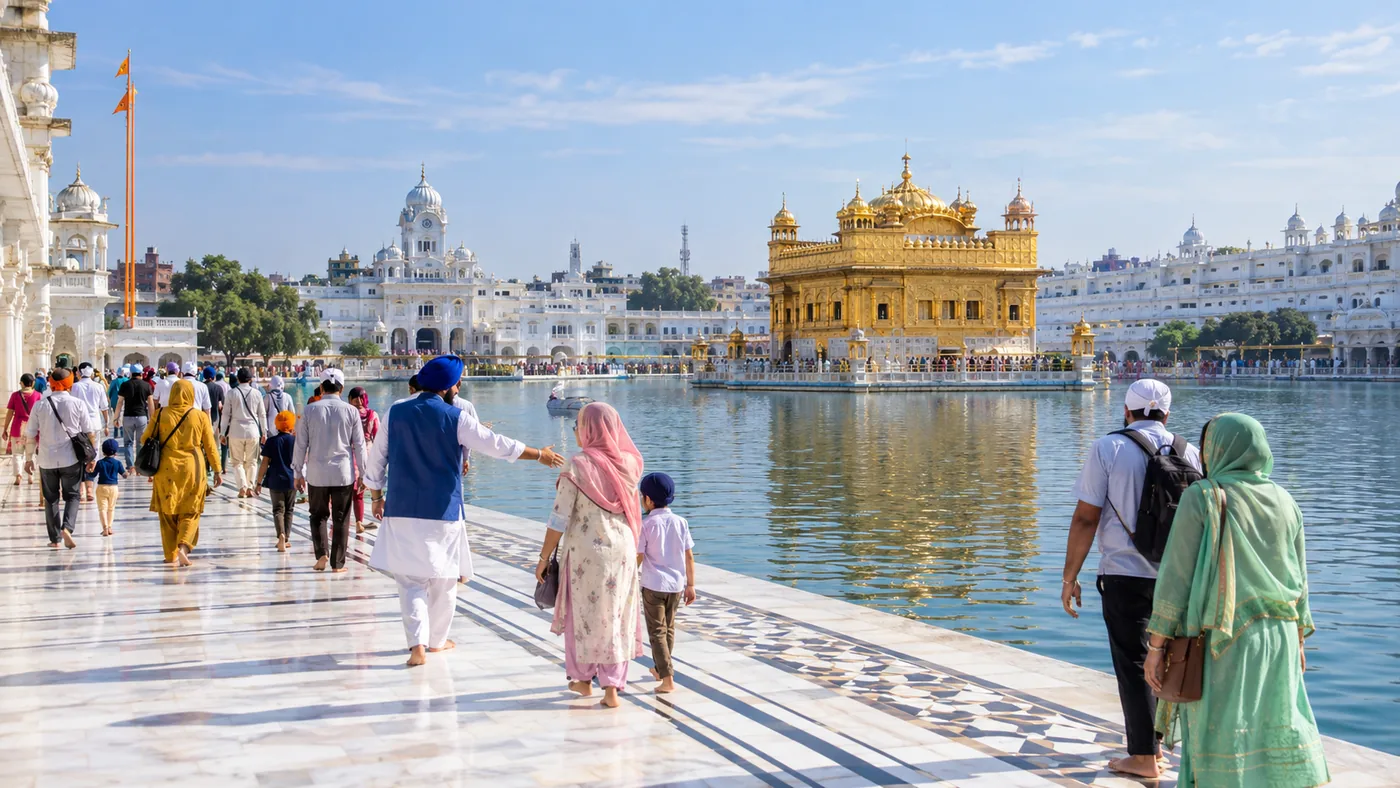
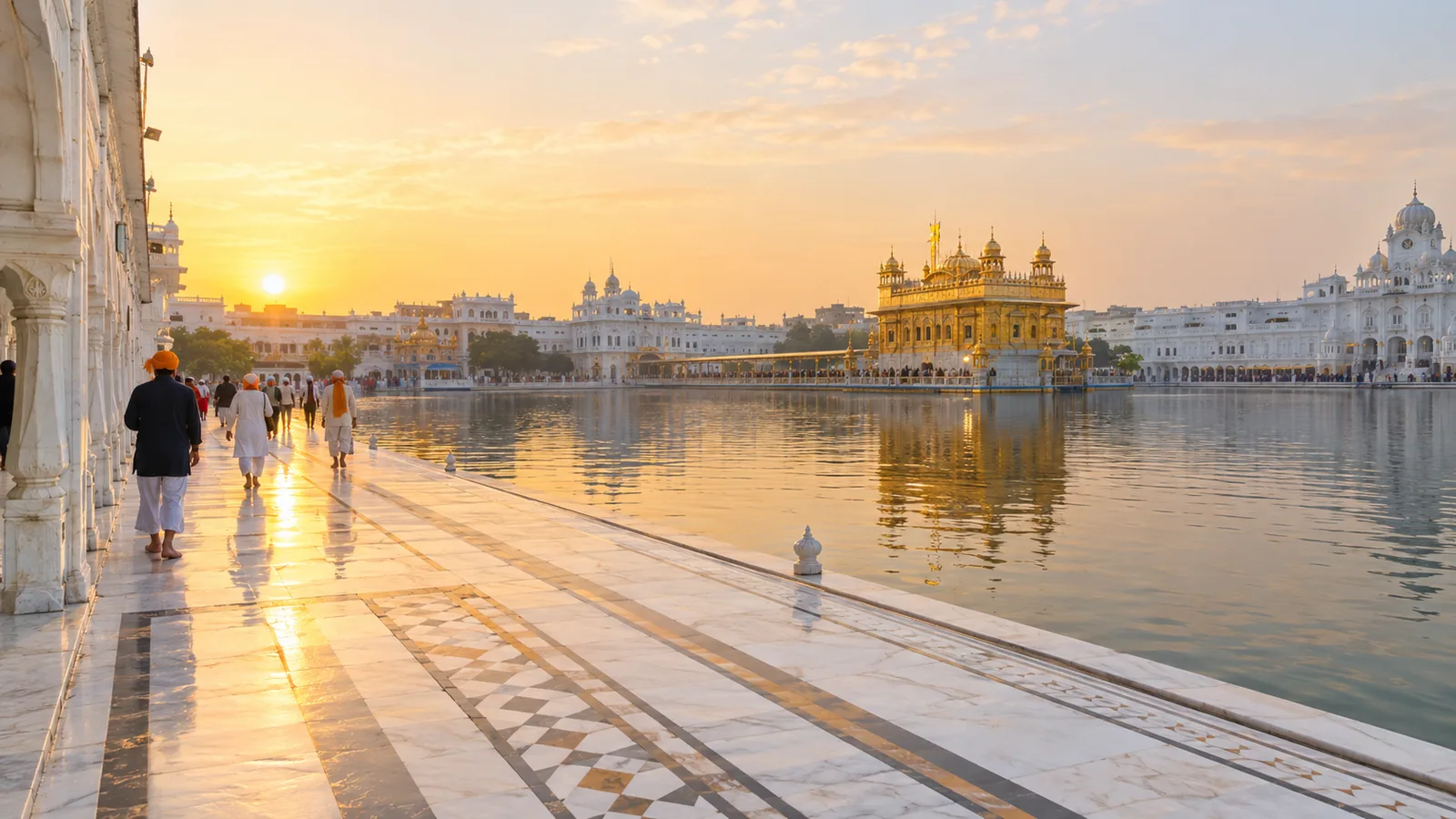
| Walk around the pool | About 20 minutes at a steady walk, about an hour with stops | Go clockwise, and stop to sit and listen. |
| Queue for the sanctum | 2 hours or more on a normal day, longer on Sundays and festivals | Shortest before dawn and late in the evening. |
| Inside the sanctum | A few minutes | The line keeps moving. No photos inside. |
| Karah prasad | A few minutes | Receive it in both cupped hands. |
| Langar | 30 to 45 minutes | Sit in the row and hold out both hands for the roti. |
| Central Sikh Museum | 30 to 60 minutes | Inside the complex; good while the midday sun is strong. |
| Collecting your shoes | 5 to 10 minutes | Leave from the entrance where you left them. |
How long is the wait to enter the Golden Temple sanctum?
Usually two hours or more on a normal day, and longer on Sundays, public holidays and festivals. The wait is shortest before dawn and late in the evening. No tour and no pass lets you skip it.
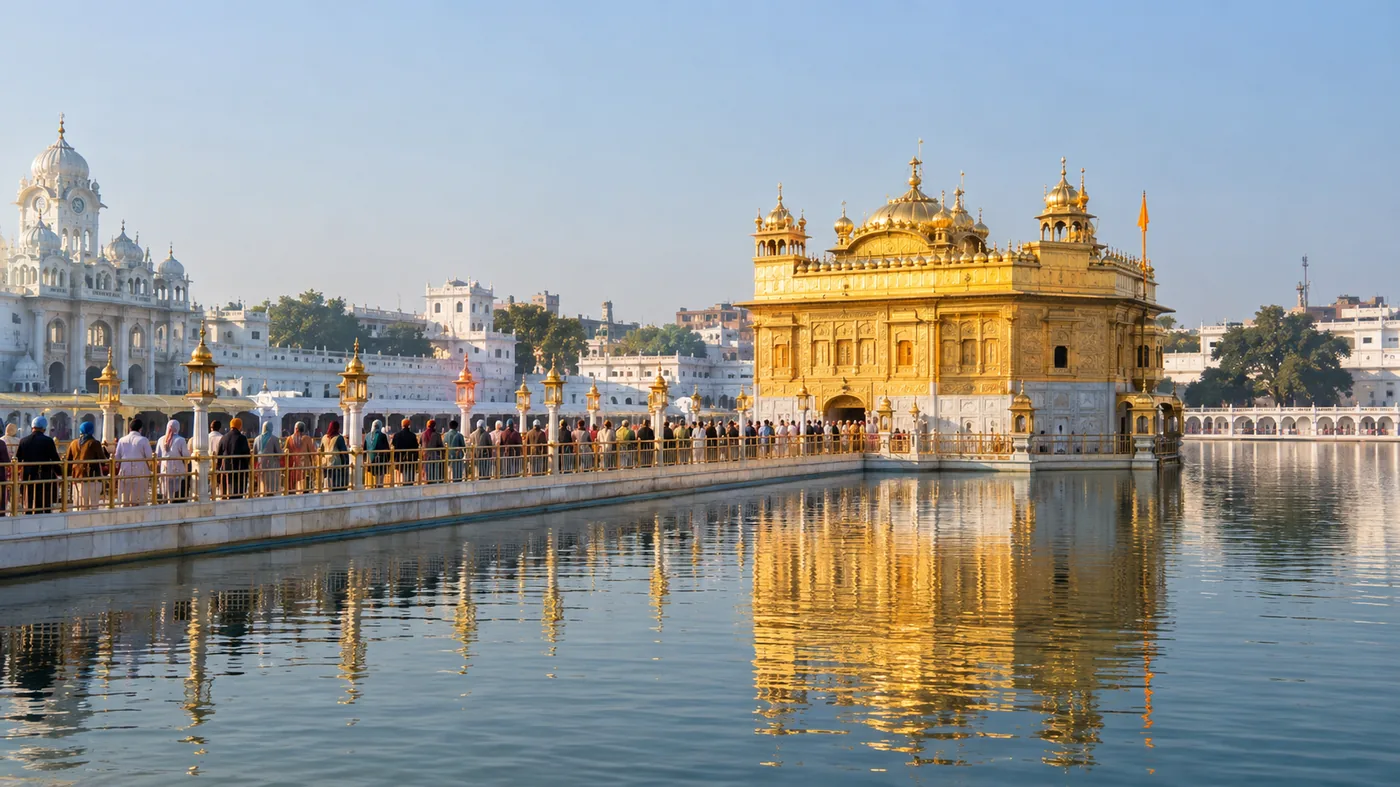
The line forms at the Darshani Deori, the gateway at the start of the causeway, and moves slowly along the causeway to the sanctum in the middle of the pool. The causeway is only about 60 m long, so most of the waiting happens in a packed, slow line on the marble, often in the sun. People wait patiently, many recite prayers, and the kirtan (hymns) from the sanctum carries over the whole complex. Once inside you keep moving with the line, so your time in the sanctum itself is short. There are no reserved places: pilgrims and tourists wait in the same line.
If you do not want to queue, you have not missed the visit. You can sit by the pool and listen, watch the reading of the Guru Granth Sahib on the big screen on Heritage Street, or come back before dawn when the line is at its shortest. Many first-time visitors decide on the spot, once they see the length of the line.
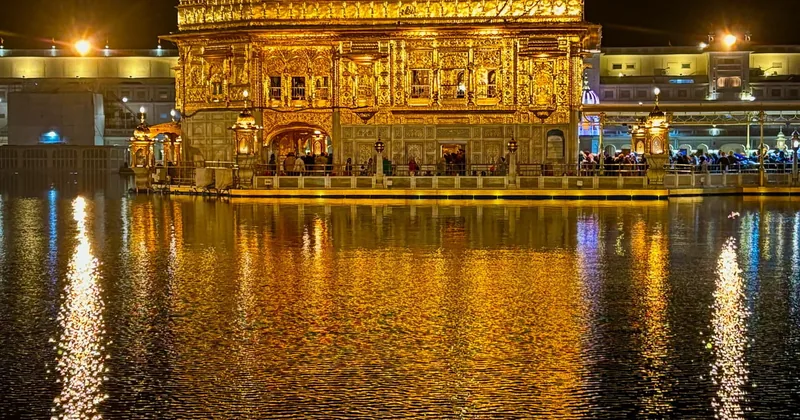
Leave the timing to a guide and a car: the temple and its kitchen in the morning, Jallianwala Bagh next door, then the border ceremony, rated 4.9.
Check dates for the Golden Temple, Jallianwala Bagh and Wagah dayIs the Golden Temple crowded today?
Almost certainly busy, because more than 100,000 people come on a typical day. There is no live crowd counter, but the pattern is steady: Sundays, holidays and festivals are the busiest, and weekday nights and the hours before dawn are the calmest.
Local devotees come in large numbers on Sundays and public holidays, so those are the heaviest days of the week. On gurpurabs (festivals of the Gurus) and at Vaisakhi, the crowd can be several times the usual size. The next dates in the SGPC calendar are Guru Ram Das's Parkash Purab on 27 October 2026, Bandi Chhor Divas, when the temple is lit with lamps, on 8 November 2026, and Guru Nanak's Parkash Purab on 24 November 2026. Lunar-calendar festivals move each year, so check the dates for your trip in the best time to visit. In May and June the heat thins the afternoon crowd, but the marble gets very hot underfoot.
To get a feel for the day before you go, SGPC streams the kirtan from the sanctum live on its official website. The table sums up the usual daily rhythm.
| Time | Crowd | Why |
|---|---|---|
| About 2 to 5 am | The lightest of the day | The doors have just opened. Pilgrims come for the first hymns and the dawn procession, and few day visitors are up. |
| 5 to 9 am | Light, then building | Early risers and local devotees before work: the best daylight window for the sanctum. |
| 9 am to 4 pm | The heaviest, especially at weekends | Day visitors and tour groups arrive. In May and June the afternoon heat thins the crowd, but the marble is very hot. |
| Sunset to 9 pm | Busy but relaxed | People come to see the temple lit and to hear the evening prayer. |
| 9 pm to the night ceremony | Thinning | Families head home; a good time to see the Sukhasan procession. |
| Midnight until the doors open | Very quiet | The sanctum is closed for washing. The walkway and the langar stay open. |
How long do the langar and karah prasad take?
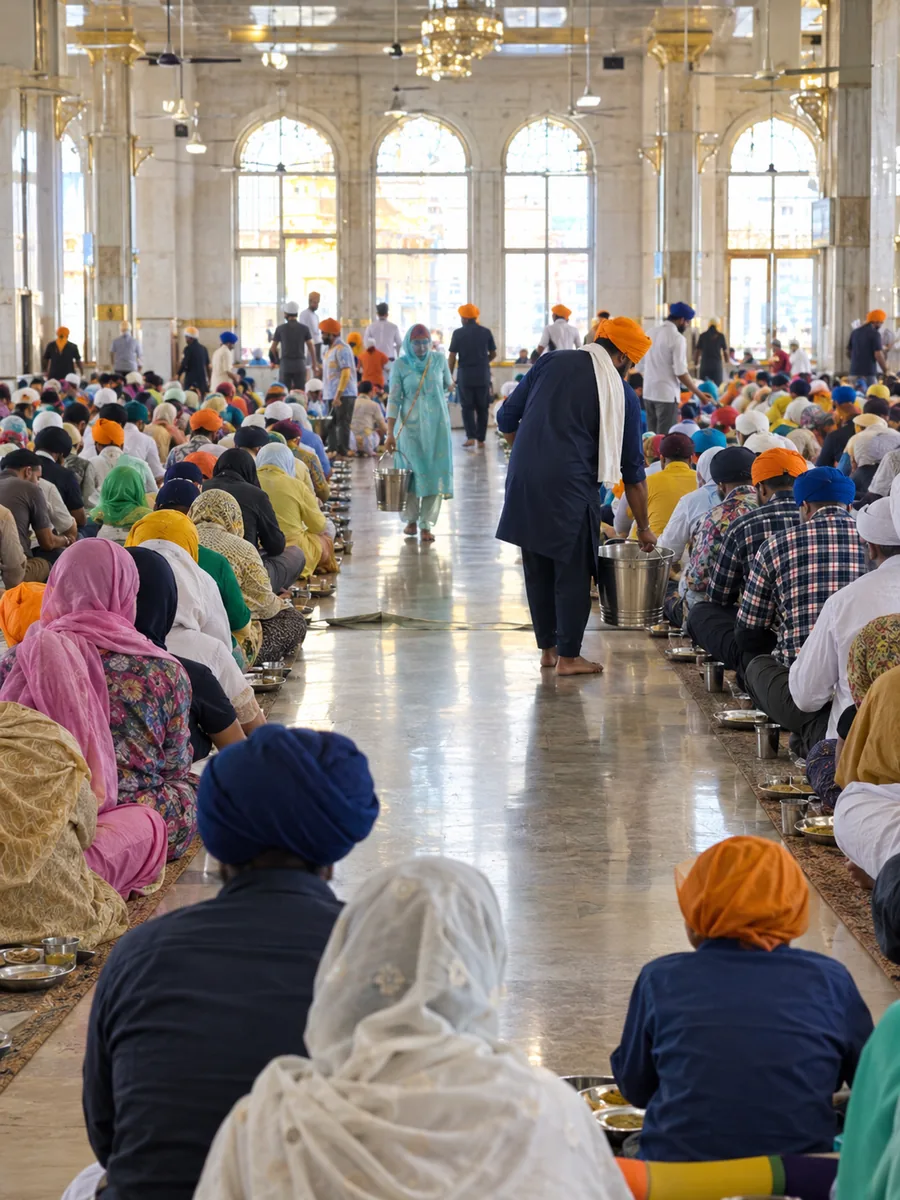
Plan 30 to 45 minutes for the langar, including a short wait to enter the hall, and a few minutes for karah prasad. The langar serves everyone who comes, at any hour of the day or night.
The langar halls seat about 5,000 people per sitting and are cleaned between sittings, so the wait at the door is rarely long. You collect a plate, a bowl and a spoon from the volunteers, sit down in the rows on the floor, and a simple vegetarian meal is served to you, usually with dal and rotis. Volunteers come along the rows with buckets for second helpings. You eat at your own pace, then hand in your plate as you leave. If you have time, you can stay to help roll rotis or wash dishes, for as long as you like.
Karah prasad is placed in your cupped hands by a sewadar (volunteer). It takes a moment, though the line for it can add a few minutes at busy times. Other stops add time too: the Central Sikh Museum inside the complex takes 30 to 60 minutes, and collecting your shoes takes 5 to 10 minutes. Leave your shoes at the entrance you plan to leave from, or you will walk back around the pool for them.
What does a two-hour visit look like?
Two hours is enough for the walk around the pool, a pause to sit and listen, and a meal in the langar, but not for the sanctum queue on a normal day. Here is one way to spend it.
- 0:00 to 0:15: hand your shoes to the volunteers at the joda ghar and keep the token, cover your head, wash your feet and walk through the gateway down to the pool.
- 0:15 to 1:15: walk clockwise around the pool. Stop at the Akal Takht, which faces the temple across the causeway, look along the causeway from the Darshani Deori, and sit on the marble for a while.
- 1:15 to 1:50: eat in the langar.
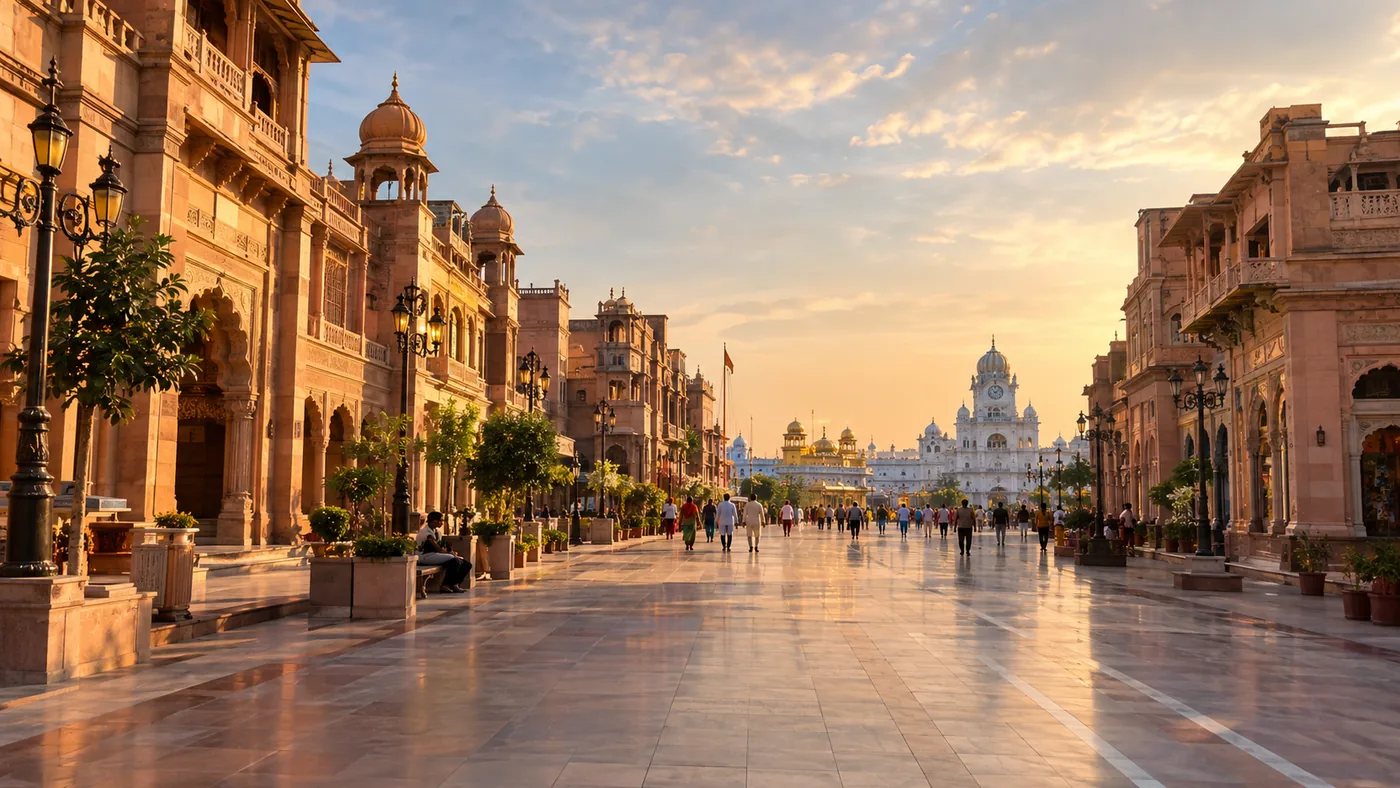
- 1:50 to 2:00: collect your shoes and walk out onto Heritage Street, or on to Jallianwala Bagh a few minutes away.
If the sanctum matters to you, add the queue to the middle of this plan, or come back for it before dawn the next day. A guided walk fits the same two hours: the Golden Temple and Jallianwala Bagh walk (4.9 from 29 reviews) covers the pool, the Akal Takht, the langar kitchen behind the scenes and the memorial garden. It does not include the sanctum queue.
Two hours on foot with a storyteller: the pool, the Akal Takht, the langar kitchen behind the scenes and Jallianwala Bagh, with a full refund if you cancel up to 24 hours ahead.
Check dates for the Golden Temple walkHow do you plan a half day or a full day around the temple?
A half day adds the sanctum queue, Jallianwala Bagh and Heritage Street to the temple. A full day adds the Partition Museum and the border ceremony at Attari, and works best if you start at the temple before dawn.
Half day, about 4 to 5 hours: arrive at about 6 am, after the dawn procession, walk around the pool, then join the sanctum line while it is still moving well. Eat in the langar, walk to Jallianwala Bagh a few minutes away, and back along Heritage Street. An afternoon half day works too, but the queue is usually longer, and in summer the marble is hot.
- Before dawn: the temple from about 4 or 5 am, with the Palki Sahib procession and the shortest sanctum queue of the day. The times are in the dawn and night guide.
- 8 to 9 am: breakfast in the langar or in the old city.
- 10 am: the Partition Museum in the Town Hall, open 10 am to 6 pm and closed on Mondays. Allow about 1.5 to 2 hours.
- Noon: Jallianwala Bagh, then lunch near Heritage Street.
- Early afternoon: leave for the Attari border, about 28 km and 45 minutes by road. Arrive 1 to 2 hours before the ceremony, which is held around sunset; seats are first come, first served.
- Evening: back in Amritsar, and the temple again after dark if you still have energy.
Day tours follow much the same order. One reviewer of the full-day private tour felt it could have been a half day, because they had seen the temple and the Bagh by late morning and waited for the border. The ceremony lies inside the 10 km strip along the Pakistan border that the UK and US governments advise against visiting, so check your own government's advice and your travel insurance first. The safety guide explains the details.

The temple and its langar kitchen, Jallianwala Bagh, the Partition Museum and the border ceremony in one day with hotel pickup. The most reviewed tour here, rated 4.6 from 111 reviews: reviewers call it a full-on day that never felt rushed. Avoid Mondays if the museum matters to you.
Explore the small-group Amritsar dayHow many days in Amritsar is enough?
Two days is right for most first-time visitors. One day covers the temple, Jallianwala Bagh and the border ceremony, but only at a run; two days lets you see the temple by day and by night and add the Partition Museum and the old city.
One day works if you arrive the evening before or leave the night after. You see the temple early, walk to Jallianwala Bagh, and drive to the border in the afternoon. You miss the temple at night, which many visitors remember most, unless you go back after the ceremony.
Two days give the visit room to breathe. On the first day, see the temple in the afternoon and again after dark, walk Heritage Street and visit Jallianwala Bagh, which has an evening sound and light show. On the second, go back before dawn for the procession and a short queue, visit the Partition Museum (not on a Monday), eat in the old city and drive to the border ceremony. A third day adds Gobindgarh Fort with its evening shows, the Durgiana Temple, a Hindu temple from the 1920s built in the style of the Golden Temple, and Ram Tirath, about 12 km west of the city.
From Delhi, the Vande Bharat takes about 5.5 hours and the Shatabdi about 6 hours, so the journey fills most of a day. Plan your two days in Amritsar on top of it.
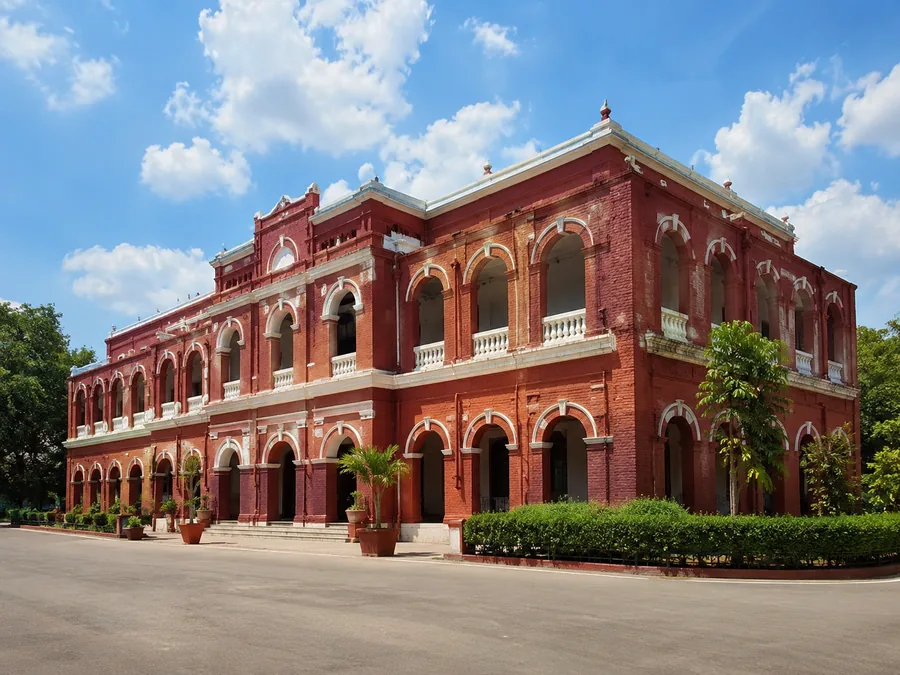
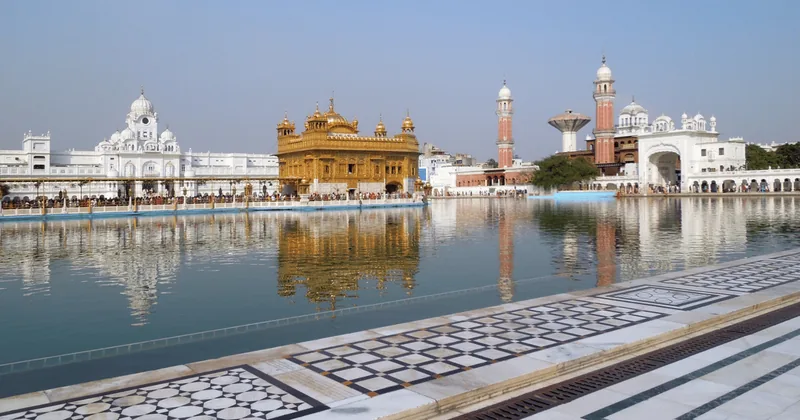
The morning Shatabdi from Delhi, a transfer to the border ceremony, a night in an Amritsar hotel with breakfast, then the temple and Jallianwala Bagh with a guide and the train back. Hotel pickup in Delhi. Rated 5.0, from 6 reviews so far.
Explore the two days from DelhiShould you visit twice, and does a tour save time?
Visit twice if you can: once by day and once after dark, when the temple is lit and the marble is cool. A tour does not save time at the temple, because no tour skips the sanctum queue; what it saves is planning, and the drive to the border.
A second visit takes less time than the first, because you already know where the joda ghar is and how the walkway runs. Forty-five minutes after dark is enough to walk around the pool once, sit for a while and watch the reflections. If you stay until about 9:45 pm in winter or 10:45 pm in summer, you can see Sukhasan, when the Guru Granth Sahib is carried back to the Akal Takht for the night. Times shift with the season, so check on the day.
With a guide, two hours feel fuller rather than shorter. You learn who the Gurus were, why the temple has four doors and what the hymns say, and some tours take you into the langar kitchen behind the scenes. The Golden Temple night walk (4.9 from 15 reviews) spends two hours on the temple at night and in the old bazaars. If you prefer to go alone, the homepage explains how a visit works, step by step, and the tours compared lays out every option.
The temple lit after dark, the hymns across the water, then the old bazaars and a local snack, in two hours with a guide.
Check dates for the Golden Temple night walkFrequently asked questions
Can you see the Golden Temple in one hour?
Yes, if you skip the sanctum. One hour covers the shoes and the foot wash, a walk around the pool and a few minutes sitting by the water. Add 30 to 45 minutes for the langar.
Is the sanctum queue shorter on weekdays?
Usually, yes. Sundays and public holidays are the busiest days because local devotees come. On any day, the shortest queues are before dawn, soon after the doors open, and late in the evening.
Does the Golden Temple close at night?
The complex never closes; the sanctum pauses each night for cleaning. It closes after the Sukhasan ceremony, at about 9:45 pm in winter and 10:45 pm in summer, and reopens at about 3 am in winter and 2 am in summer. Times shift with the season.
How much time does the border ceremony add to a day?
Around five hours: about 45 minutes each way by road, 1 to 2 hours of waiting for a seat, and the ceremony itself around sunset. Most day tours leave Amritsar in the early afternoon.
Ready to book
Choose your tour
Check your date and the live price on GetYourGuide; the refund terms are shown on each option.
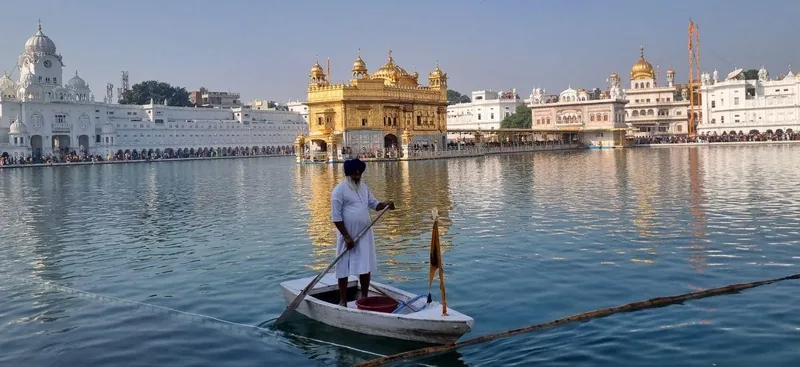
Golden Temple & Jallianwala Bagh Walk
- A guided walk around the Golden Temple complex
- The Akal Takht and the story of the Sikh Gurus
- The langar kitchen behind the scenes
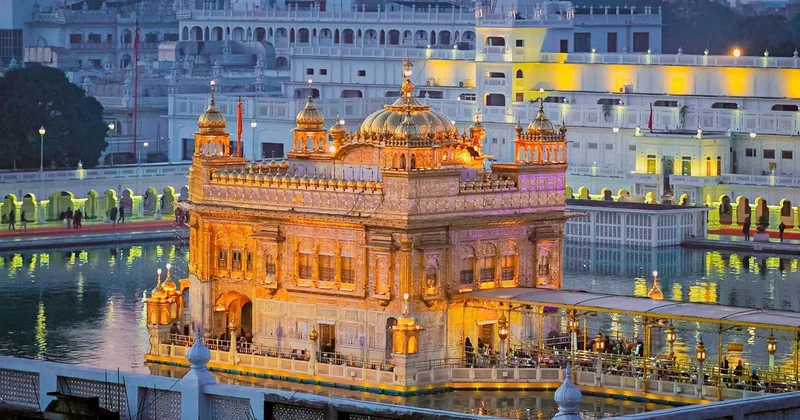
Golden Temple, Jallianwala Bagh & Wagah Day
- The Golden Temple with a guide, including the langar kitchen
- Jallianwala Bagh, a short walk from the temple
- The Beating Retreat ceremony at the Attari-Wagah border

Golden Temple Night Walk
- The Golden Temple at night with a guide
- Sikh history and customs explained as you walk
- The old bazaars around the temple