Sri Harmandir Sahib · the langar · Jallianwala Bagh · Attari border
Golden Temple, Amritsar
How a visit really works, the rules and what to wear, when the queues are short, and which
guided tours add something you would miss on your own, compared honestly before you book.
Facts checkedRules, ceremonies and history from SGPC and official sources
Real guest ratingsLive GetYourGuide figures, small review counts shown as they are
Refund terms per tourEvery tour here refunds in full up to 24 hours ahead
Secure checkoutBook on GetYourGuide, instant mobile tickets
Tours
Choose your Golden Temple tour
In the centre, the full day: the temple and its kitchen, Jallianwala Bagh and the border ceremony,
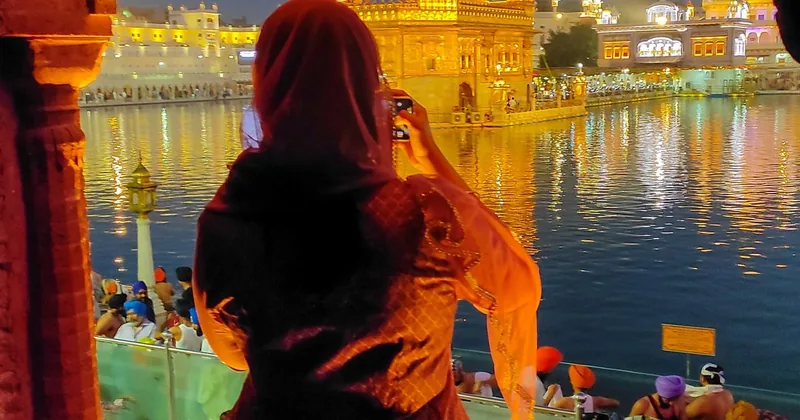
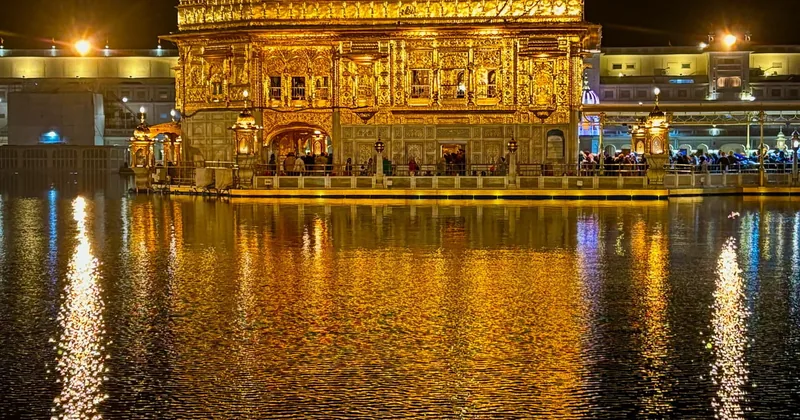
with a guide and a car. On the left, two hours on foot around the temple. On the right, the temple lit up at night.
The Golden Temple and its langar kitchen in the morning, Jallianwala Bagh next door, then the flag-lowering ceremony at the Attari border. One guide and a car all day.
What's included
The Golden Temple with a guide, including the langar kitchen
Jallianwala Bagh, a short walk from the temple
The Beating Retreat ceremony at the Attari-Wagah border
The first row is the honest baseline: the Golden Temple has no ticket and never closes, so you can
walk in on your own at any hour. A tour adds a guide who explains what you are seeing, the langar kitchen behind
the scenes, and a car for Jallianwala Bagh, the Partition Museum and the border ceremony at Attari.
Option
Starts
Best for
Length
Rating
Cancel
On your own, no tour
Any of the four entrances
A first visit if you read up first: there is no ticket and the gates never close
The Partition Museum closes on Mondays, so day tours that include it skip it that day. The
Attari border ceremony lies inside the 10 km strip along the Pakistan border that the UK and US governments advise
against visiting: check your own government's advice and your travel insurance before booking a day that includes it.
What the tour pages don't tell you
No ticket, no closing time.
You do not need a tour to see the Golden Temple. There is no ticket, the four doors are open to people
of every faith, and the complex around the pool never closes. Cover your head, leave your shoes with the
volunteers and walk in. What a guide really adds is meaning: who the Gurus were, why the doors face four ways,
what the hymns say, and a look behind the scenes of the langar kitchen that most visitors never see.
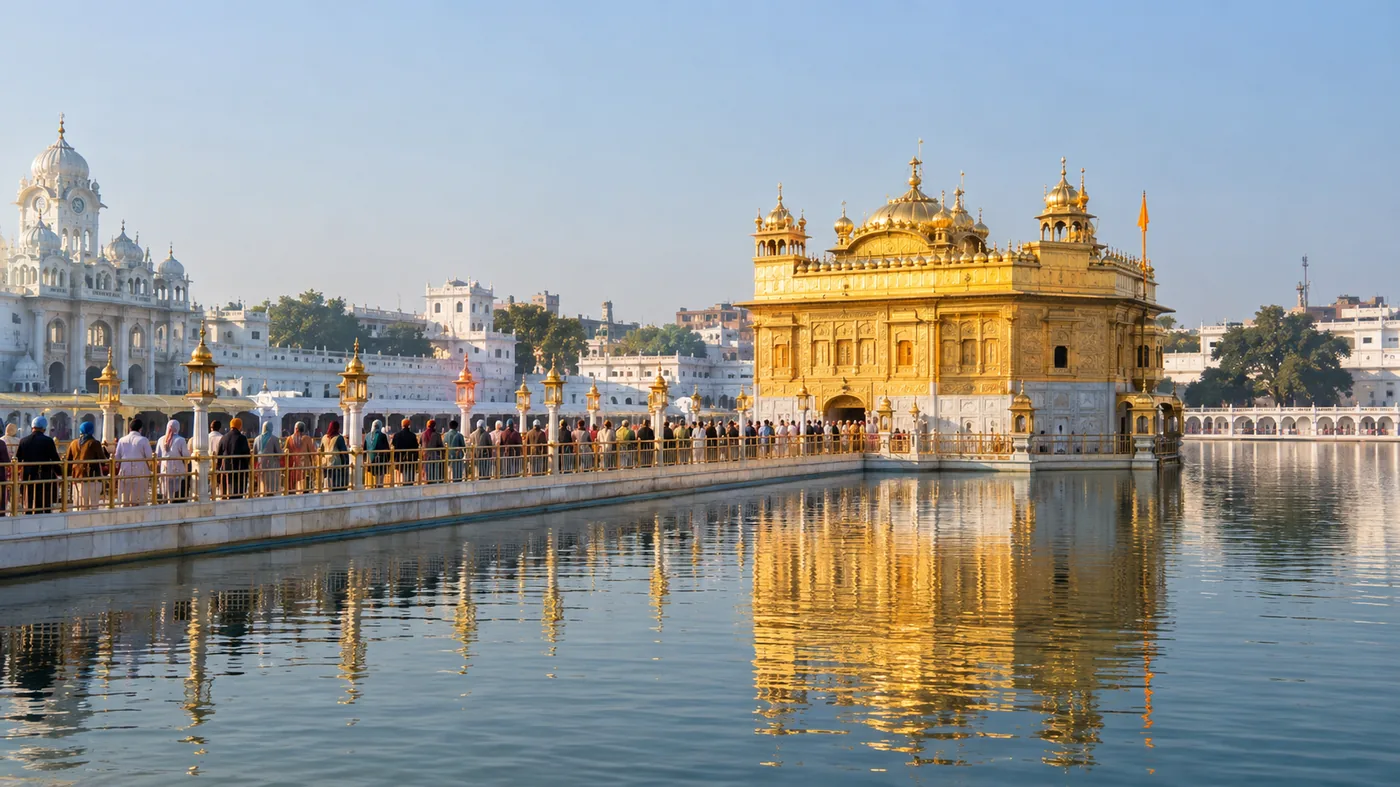
The one queue is for the sanctum itself. On a normal day the line along the causeway takes two hours or
more, and longer on Sundays and festival days. No tour skips it. The fix is timing: come when the doors open
before dawn or late in the evening, or simply walk the marble around the pool, sit and listen, and eat in the
langar. That is the visit for most people, and it needs no queue at all.
100,000+
people come on a typical day. The langar serves tens of
thousands of meals every day, around 100,000 on busy days, cooked and served by volunteers to everyone who comes.
No ticketHead coveredBarefootOpen around the clockLangar for everyone
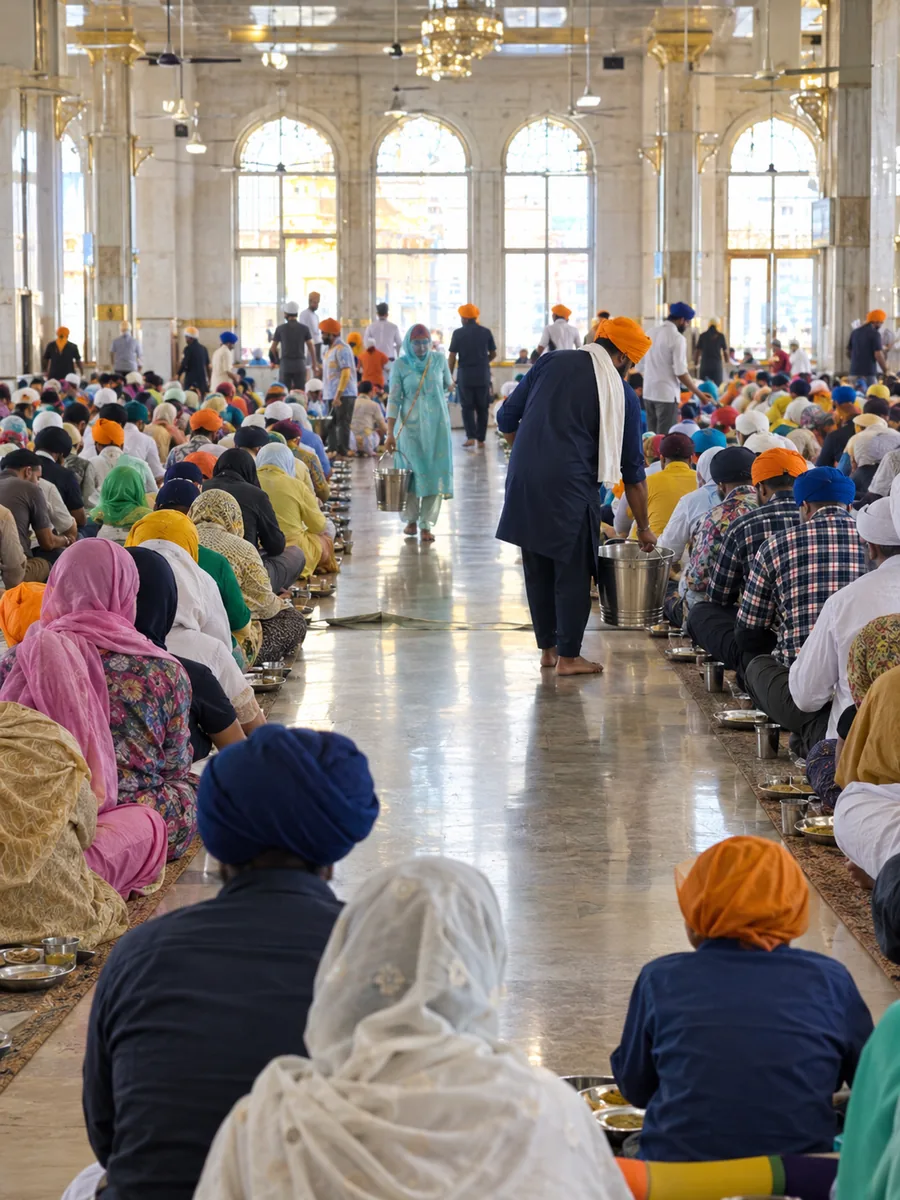
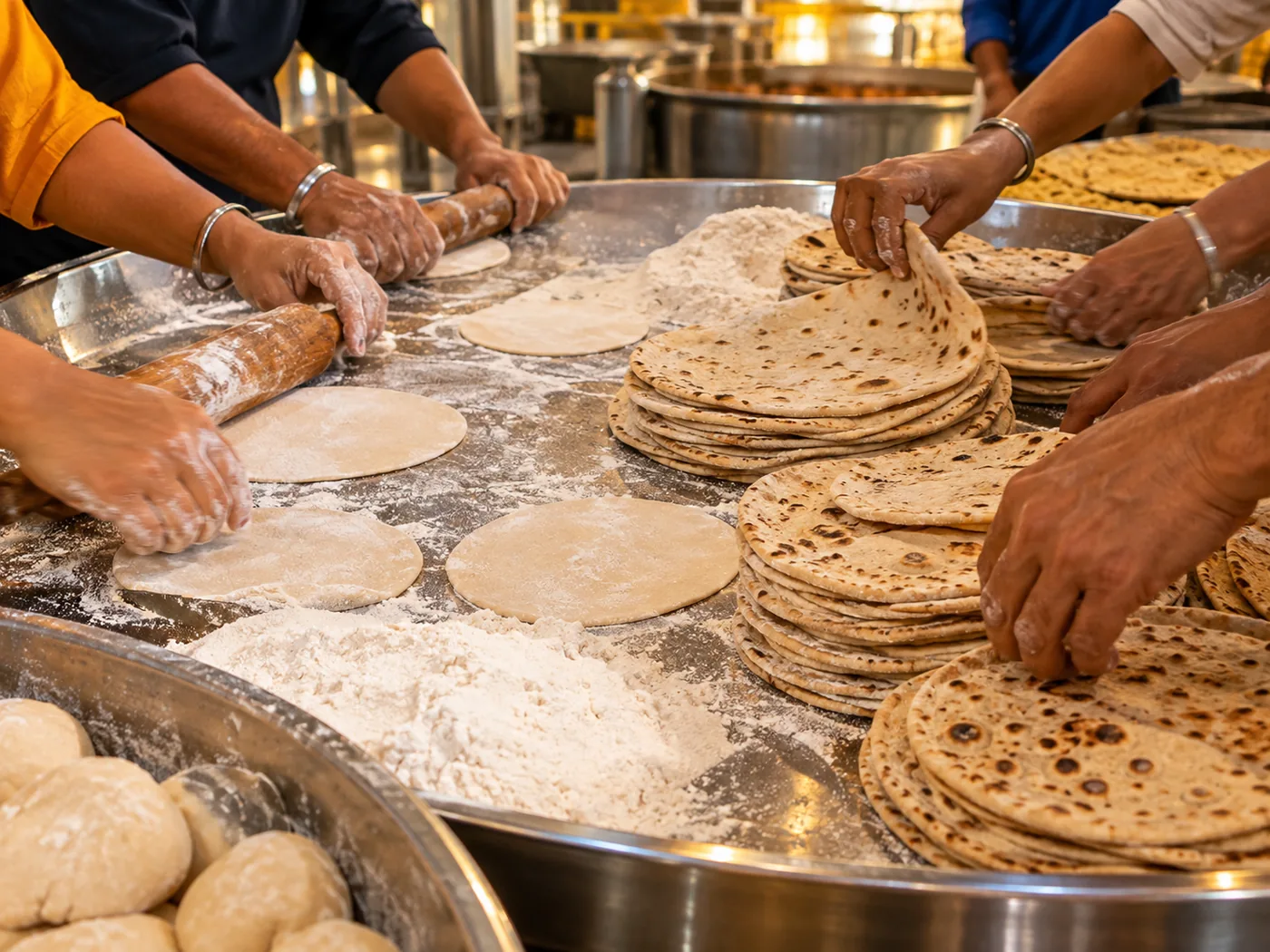
The langar: sit down in the rows and a meal is served to you.
01
Tour or not?
On your own is fine; a guide adds the stories and the kitchen backstage.
02
How long?
Two to four hours, more if you queue for the sanctum at a busy time.
03
When?
Before dawn or late evening for short queues; October to March for comfort.
04
What to wear?
Shoulders and legs covered, a scarf on your head, shoes and socks off.
How a visit works
From the shoe counter to the sanctum
Every visit follows the same order, whether you come alone or with a guide. Allow two to four hours,
and come back after dark if you can.
01
Shoes and head
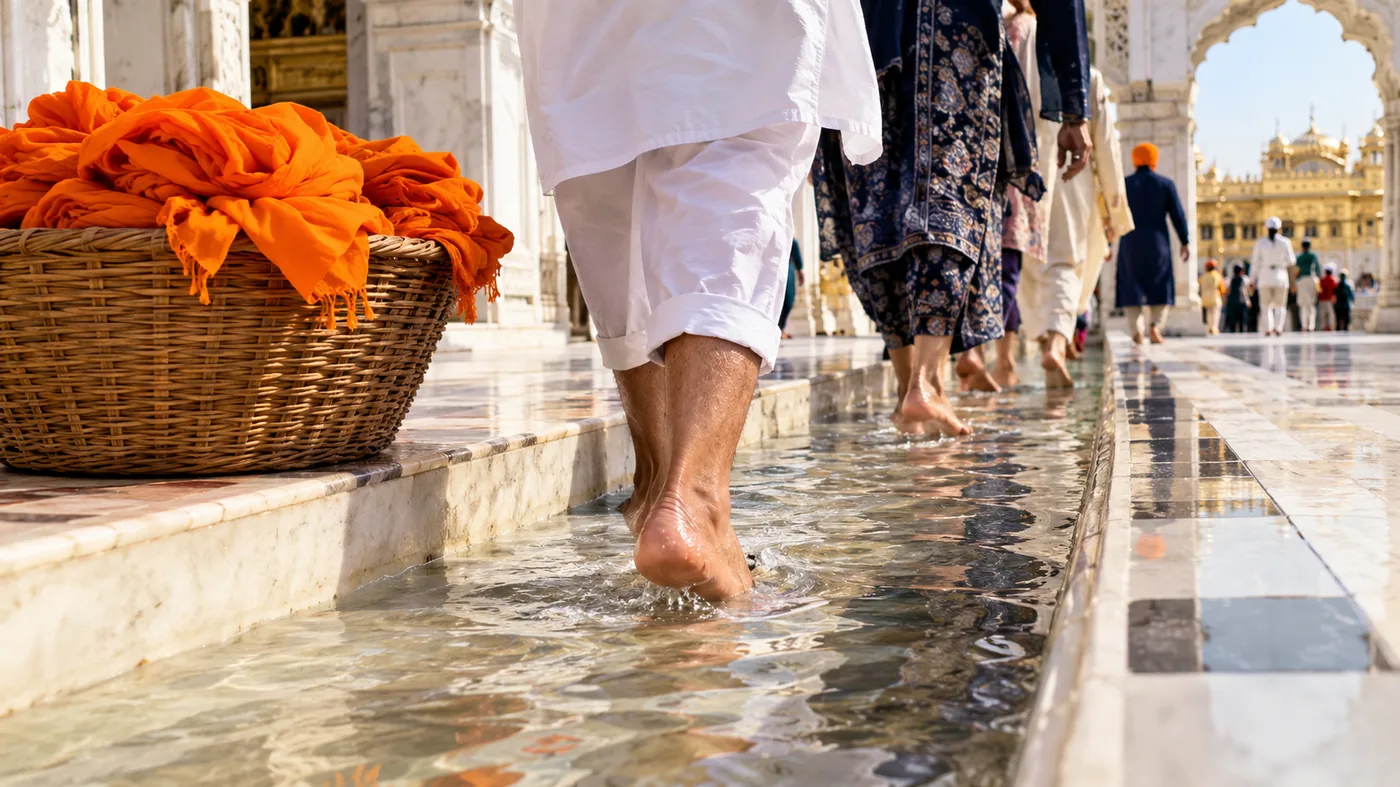
Hand your shoes and socks to the volunteers at the joda ghar and keep the token. Cover your head with a scarf; there are scarves at the entrances if you forget yours.
At any entrance
02
Wash and step down
Walk through the shallow water channel to wash your feet, go through the gateway and take the steps down to the white marble around the pool.
A few minutes
03
Around the pool
Walk the marble path around the sacred pool clockwise, past the Akal Takht and the shrines, with the hymns playing from the sanctum.
About an hour
04
Sanctum and langar
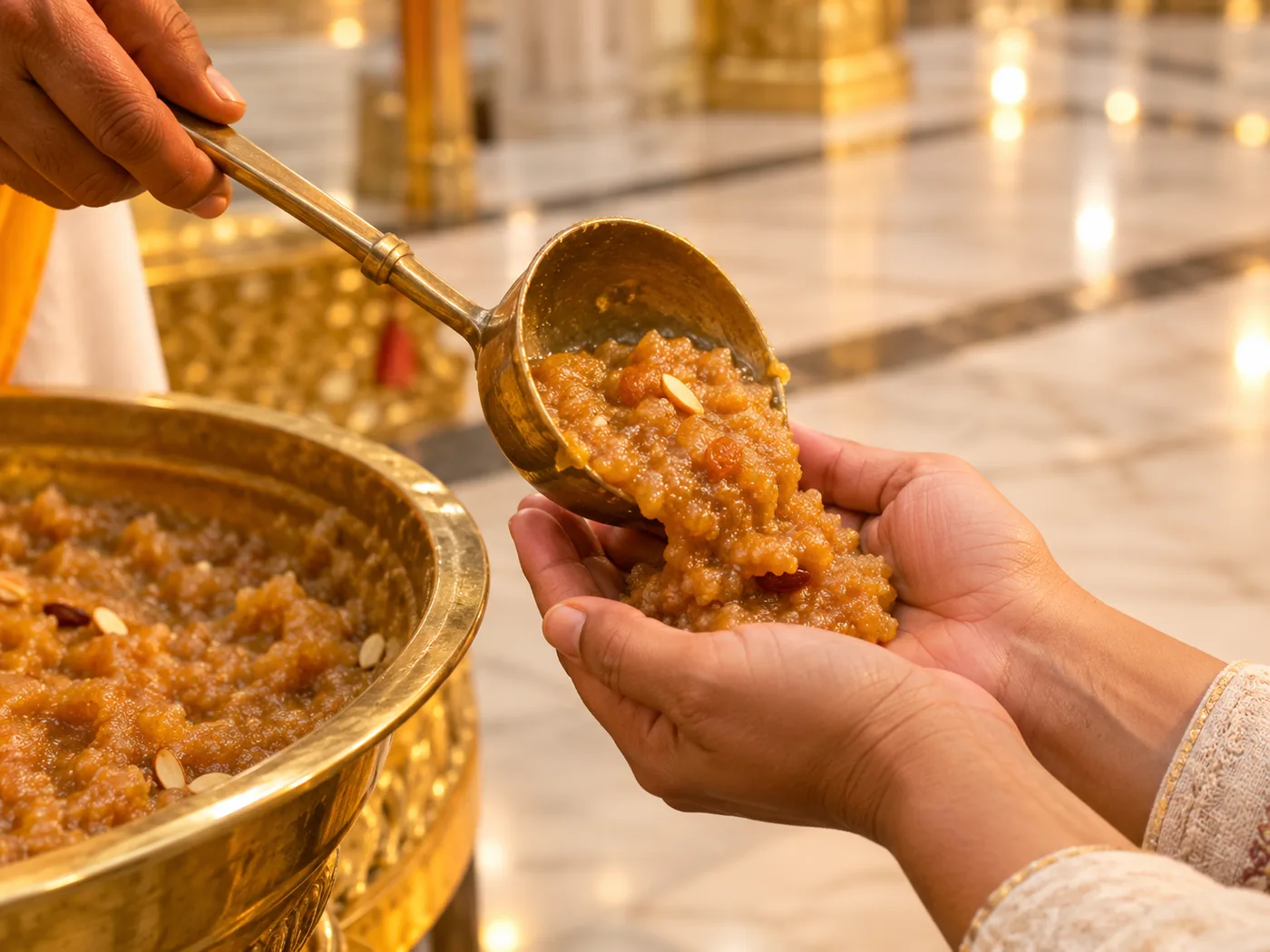
Join the line on the causeway to the sanctum if you have time, then sit down in the langar hall for a meal and take karah prasad on the way out.
What to wear, when the ceremonies happen, how to reach the temple and what to leave behind.
Head covered: everyone, men, women and children; a scarf, a dupatta or a bandana-style cloth all work.
Shoes and socks off: both go to the joda ghar; you walk barefoot everywhere inside.
Dress modestly: shoulders and legs covered; no shorts or sleeveless tops. Clean, untorn jeans are generally accepted.
Never inside: tobacco, alcohol or intoxicants, not even in a bag; since December 2025 the walled city around the temple is a holy city where their sale is banned.
Everyone is welcome: people of every faith and none, including Muslims, Hindus, Christians and non-believers.
The complex: never closes; you can walk around the pool and eat in the langar at any hour.
The sanctum: doors open at about 2 am in summer and 3 am in winter, and close after the night ceremony for cleaning.
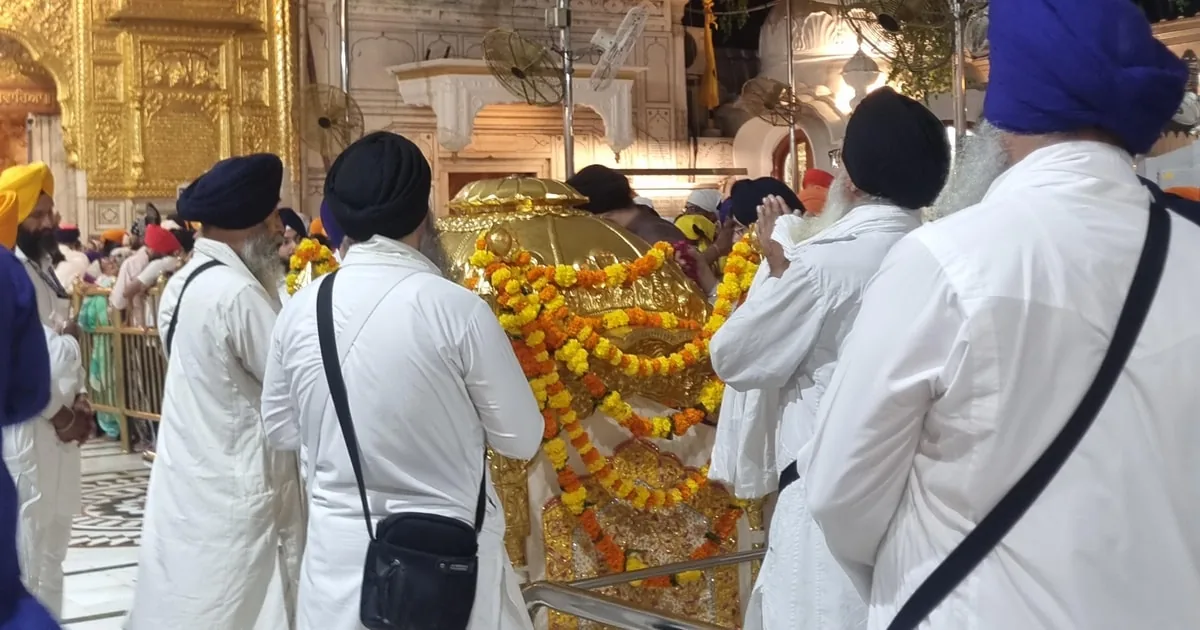
Palki Sahib at dawn: the holy book is carried in procession to the sanctum at about 4 am in summer and 5 am in winter.
Sukhasan at night: it returns to the Akal Takht at about 10:45 pm in summer and 9:45 pm in winter.
Hymns: kirtan is sung without a break from the opening of the doors until the night ceremony.
On foot: Heritage Street, the pedestrian avenue from the Town Hall, leads to the main entrance; cars stop before it.
From the station: Amritsar Junction is about 2 km away; SGPC runs shuttle buses for devotees around the clock.
From the airport: about 11 km from the city centre; most arrivals take a taxi to the Heritage Street drop-off.
From Delhi: the Vande Bharat takes about 5.5 hours and the Shatabdi about 6 hours.
With a tour: day tours pick you up at your hotel; walking tours meet near the temple.
A scarf: your own is nicest, in any colour; black is fine.
Slip-on shoes: you take them off and put them back on at the joda ghar.
A small bag only: leave anything large at your hotel; you will carry it barefoot for hours.
Your phone on silent: quick photos around the pool are tolerated, but no videos and no photos inside the sanctum.
Nothing to smoke or drink: leave tobacco and alcohol at the hotel.
24 hAlways openThe complex and the langar never close.
4DoorsOne on each side, open to every faith.
1604Scripture installedGuru Arjan Dev placed the Adi Granth inside.
1830Gold leafUnder Maharaja Ranjit Singh, over gilded copper.
5,000Per sittingDiners in the two main langar halls.
28 kmTo AttariThe border ceremony, about 45 minutes away.
Where it starts
The main gate, Heritage Street
Golden Temple, Amritsar
Golden Temple Road, old walled city, Amritsar, Punjab
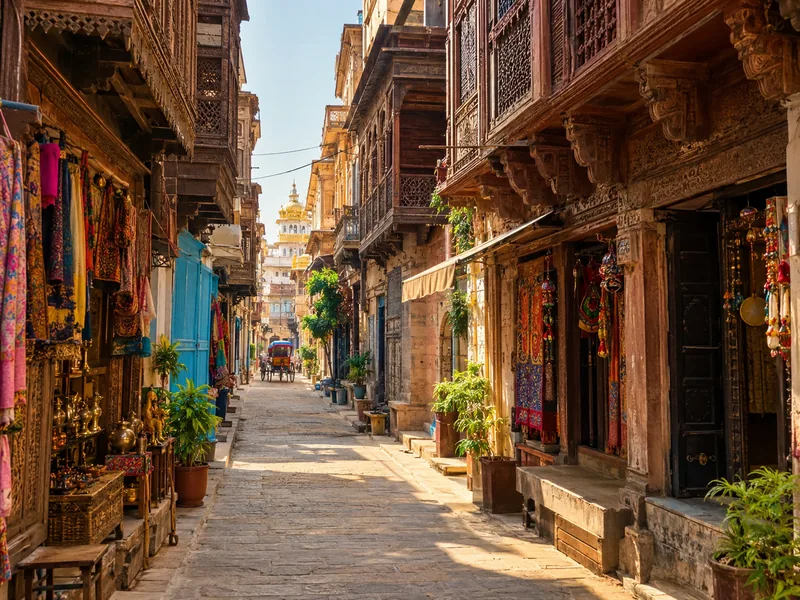
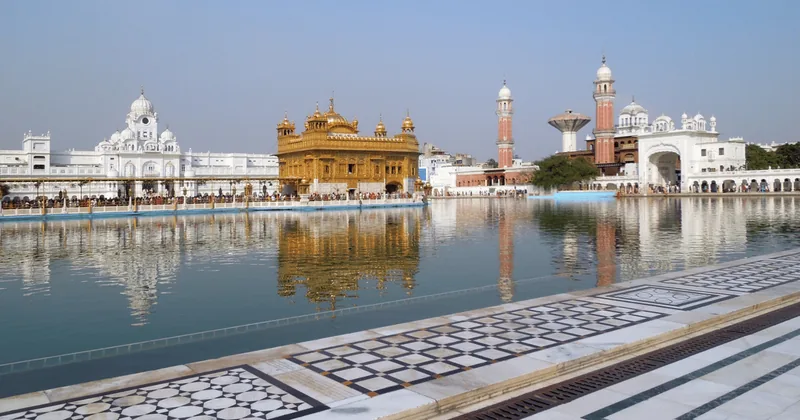
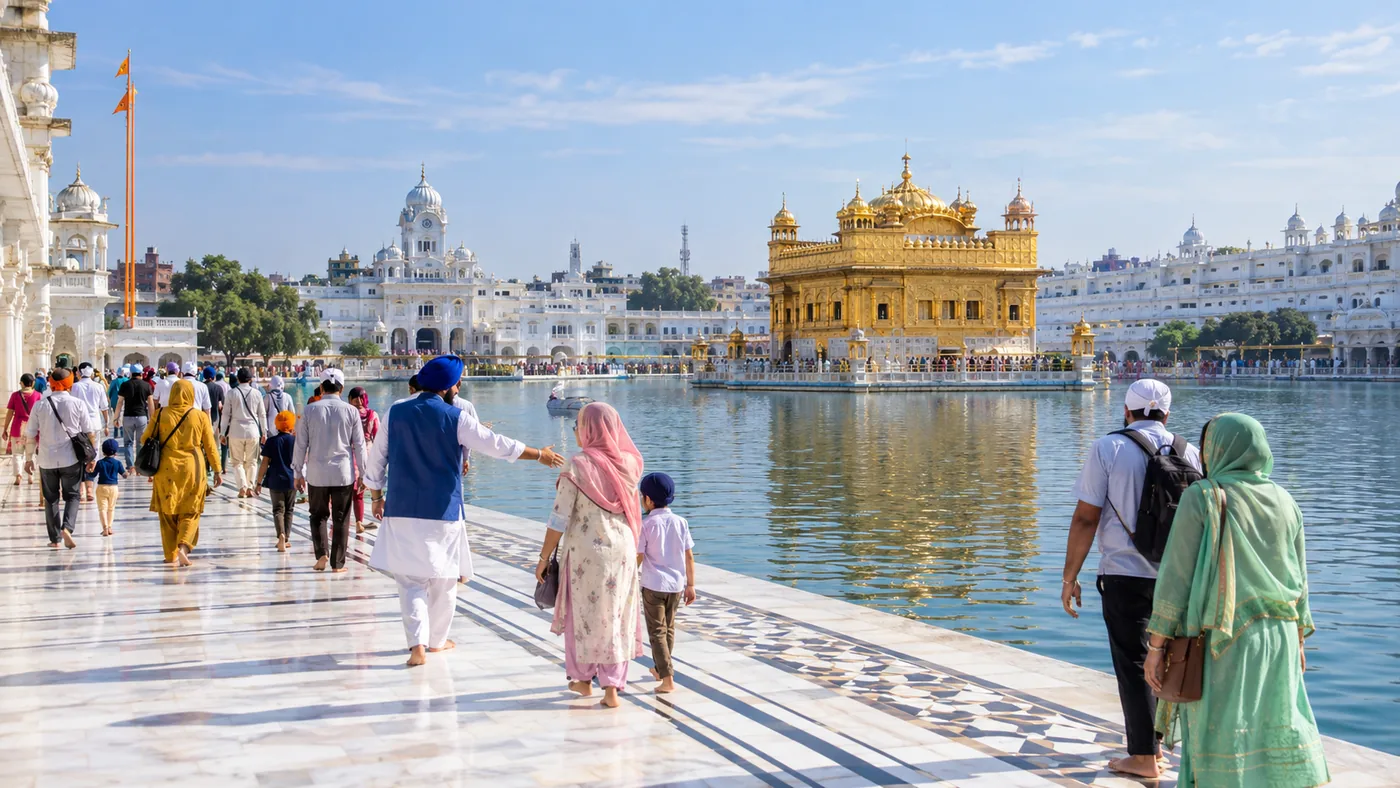
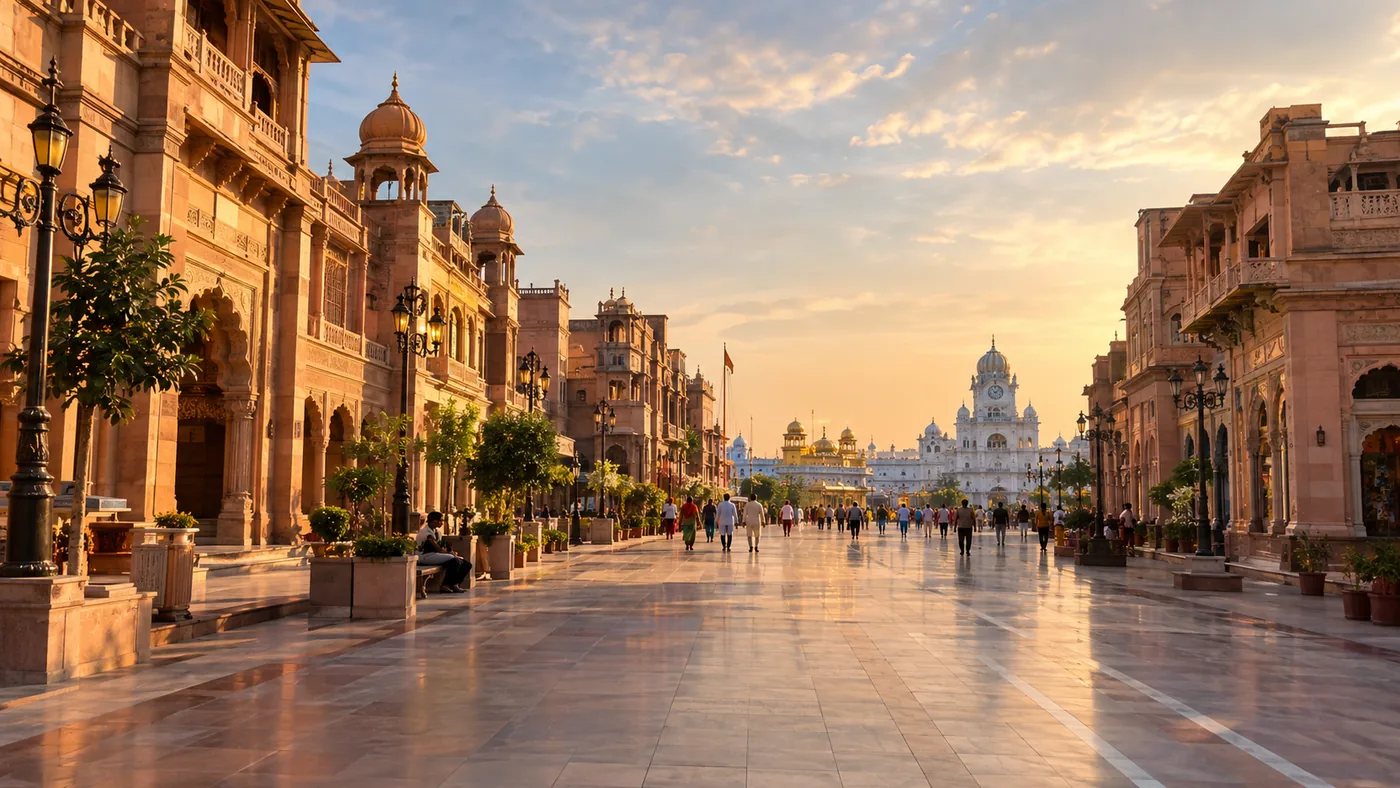
The temple sits in the middle of the old walled city. Most visitors arrive along Heritage Street, the wide
pedestrian avenue that runs about 1 km from the Town Hall to the main entrance, past Jallianwala Bagh and a big
screen showing the reading inside the temple. Cars and rickshaws drop you before it, so the last stretch is on
foot. The shoe counters, the foot-wash channel and the scarves are at every entrance. Walking tours meet on or
near Heritage Street; day tours pick you up at your hotel.
When to come, what first-timers wish they had known, what is next door, and the border ceremony.
October to March: the most comfortable months; December and January mornings are cold and often foggy.
April to June: very hot, with average highs near 39 °C in May; the marble heats up in the afternoon.
July to September: the monsoon brings most of the year's rain, and fewer visitors.
Festivals: the busiest days are Guru Ram Das's Purab (27 October 2026), Bandi Chhor Divas with the lamps (8 November 2026) and Guru Nanak's Purab (24 November 2026).
Time of day: before dawn and late at night are the calmest; Sundays are the busiest days of the week.
Come twice: once in daylight and once after dark, when the gold is lit and the marble is cool.
Sit on the marble by the pool for a while; nobody will hurry you, and the hymns carry across the water.
In the langar, hold out both hands for the rotis, and stay to help roll or wash up if you like.
SGPC books the rooms in its pilgrim guest houses only through its own website; ignore anyone else offering them.
If the sanctum line is long, watch the reading on the big screen on Heritage Street instead.
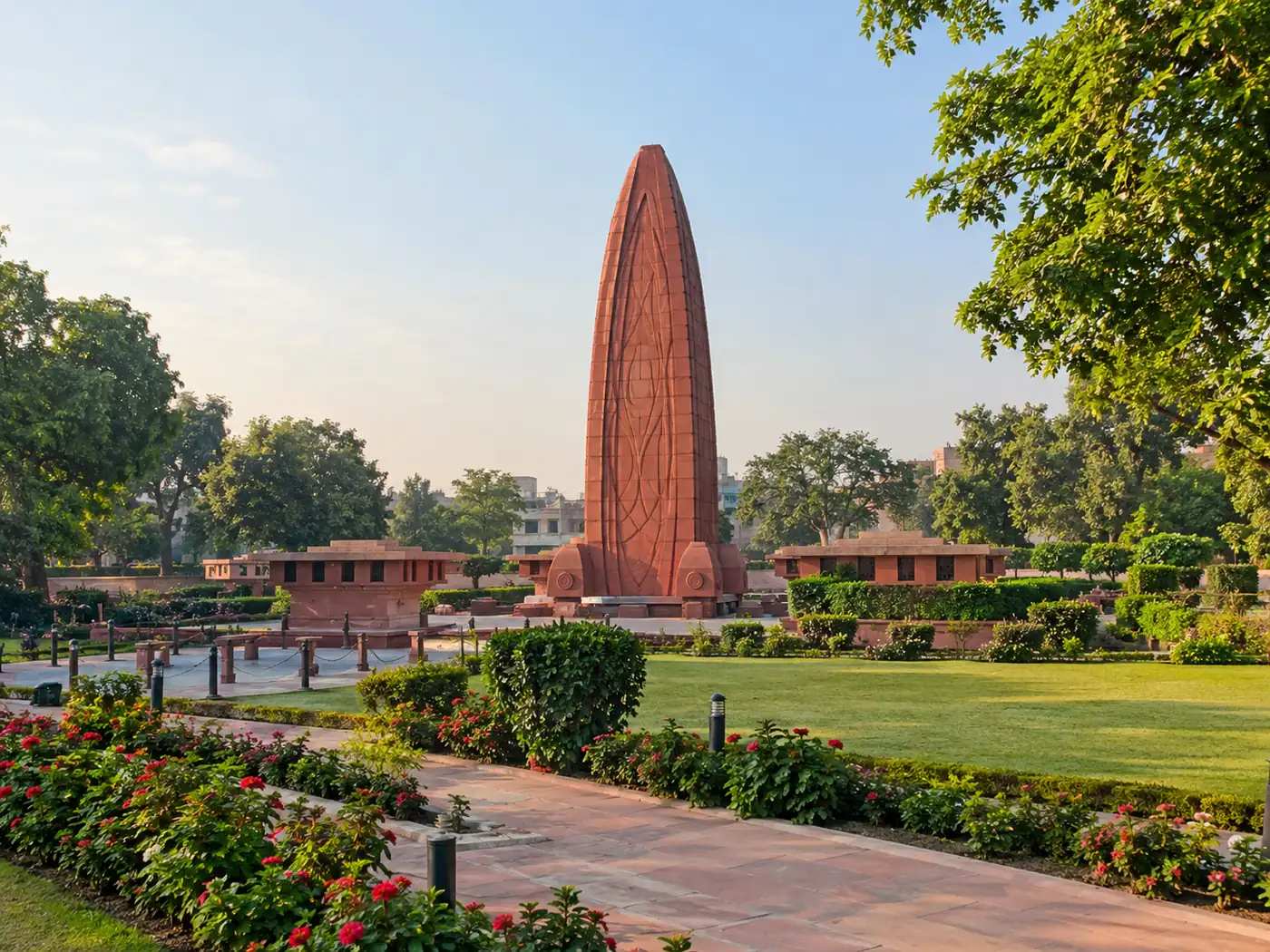
Jallianwala Bagh: the memorial garden to the massacre of 13 April 1919, a few minutes' walk away.
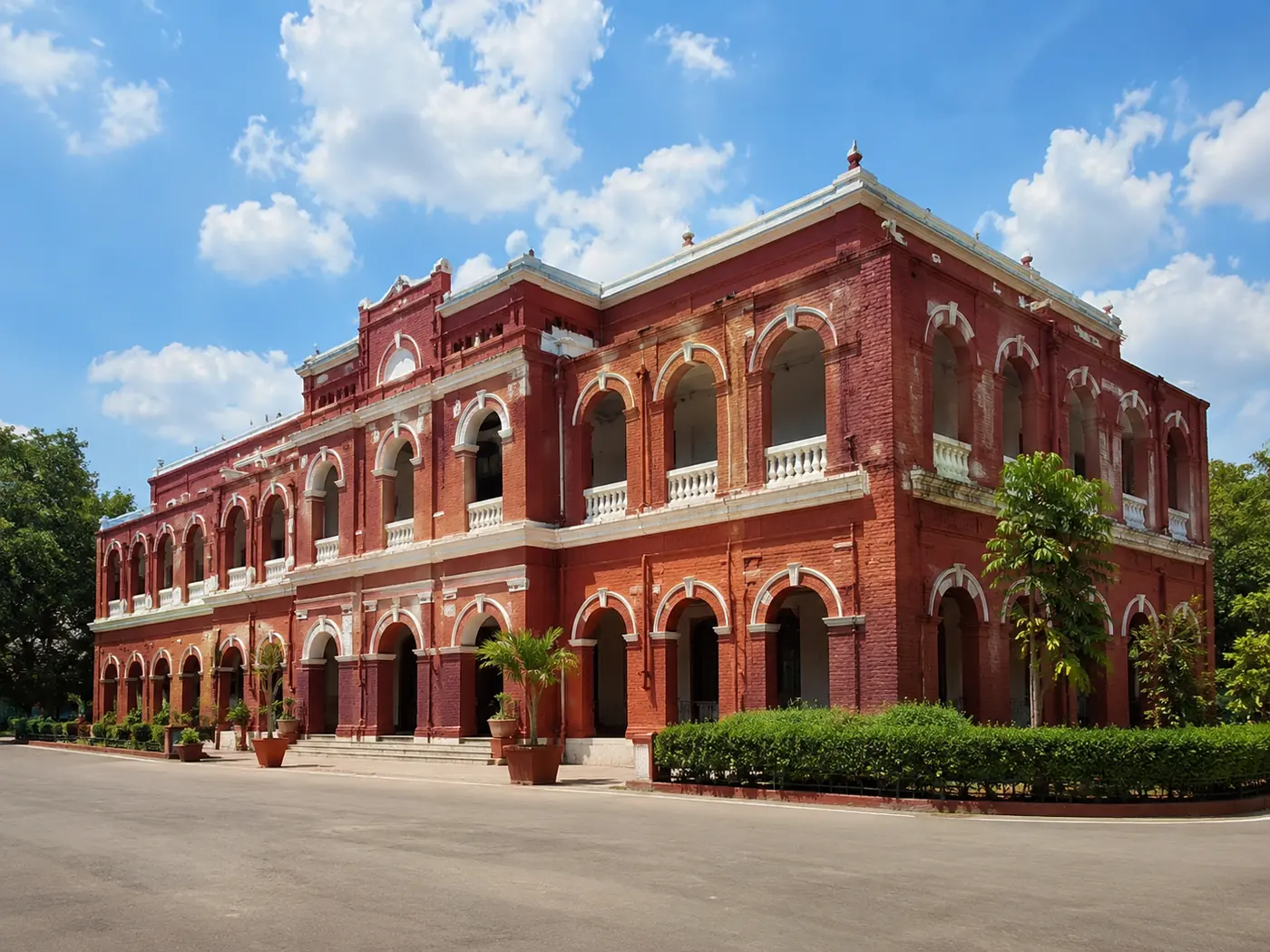
Partition Museum: in the Town Hall on Heritage Street, open 10 am to 6 pm, closed on Mondays.
Durgiana Temple: a Hindu temple from the 1920s built in the style of the Golden Temple, near the station.
Gobindgarh Fort: museums and evening shows in an 18th-century fort.
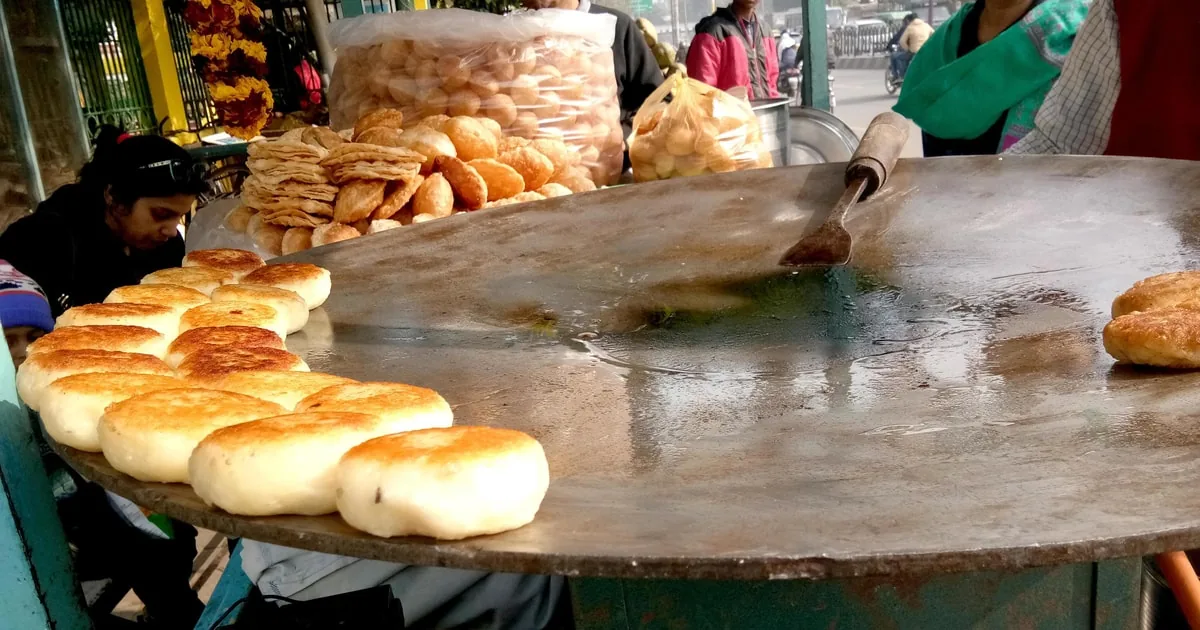
Food streets: Amritsari kulcha, chole and lassi around Hall Gate and Lawrence Road.
Where: the Attari-Wagah border, about 28 km and 45 minutes from the temple.
When: every day around sunset; the Border Security Force sets the time and changes it with the seasons.
What to expect: since April 2025 the ceremony is scaled down: the gates stay shut and there is no handshake.
Practical: arrive one to two hours early, carry your passport if you are a foreign visitor, and leave bags behind.
Advice: the UK and US governments advise against travel within 10 km of the border; check yours and your insurance.
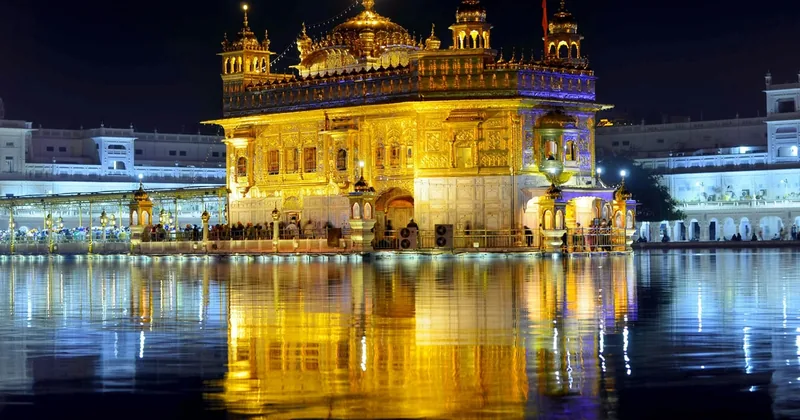
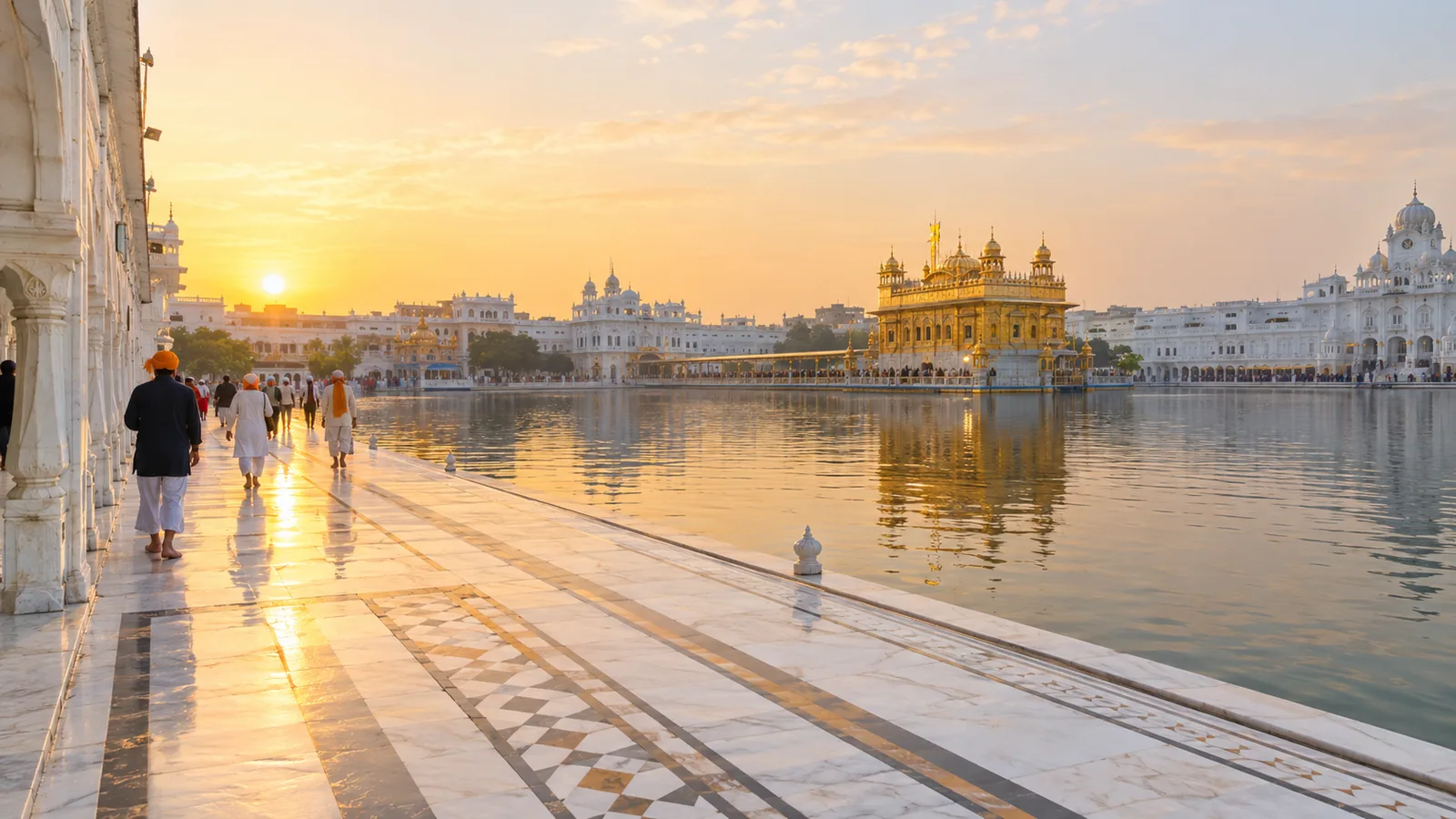
Sri Harmandir Sahib · after dark
Come back after dark.
The gold lit against the night sky, the hymns across the water and the Palki Sahib procession at the end of the day.
4.9★★★★★ 47 reviews · Golden Temple, Jallianwala Bagh and Wagah day GetYourGuide figure
★★★★★
Amanatjit was superb. Knowledgeable, insightful and absolutely charming. It was one of the best days of our 5 week trip around India.
★★★★★
Highly recommended for those who want to learn about the Golden Temple, the religion and the culture. The best part is the visit to the community kitchen backyard that you would not have access to on your own.
★★★★★
The Golden Temple complex is memorable and beautiful, especially at night. Well worth getting a guide to maximise your experience. Ravish also pointed out great photo spots.
★★★★★
Our guide Sumit was fantastic, a very knowledgeable young man with a clear passion for his city and heritage. It is a full-on day but we never felt rushed, and it was a great way to see all the major sights in one day.
★★★★★
I really valued all of the history we learned about India's struggle for independence. I was most moved by seeing the generosity of the Sikh philosophy in action through the volunteers working in the kitchens and sharing food there.
★★★★★
Excellent tour. Lots of amazing foods: chota puri with spicy carrots, nutri kulcha, gur ka halwa, paneer bhurji and a bun maska dipped in chai. A great walk around the city learning the history of Amritsar.
★★★★★
Our guide Mr Singh was excellent. We saw the Golden Temple by day and by night, which I highly recommend. The border ceremony is like a stadium affair and was interesting to see.
★★★★★
A day that felt less like sightseeing and more like sharing stories with a friend. Paramjit guided me through the solemn history of Jallianwala Bagh, the awe of the Golden Temple and the electric energy of the Wagah Border parade.
★★★★★
Two train journeys and a couple of days in Amritsar really relaxed me. All was well organised, and the guide in Amritsar made for lots of philosophical conversations. Recommended.
Before or after the temple
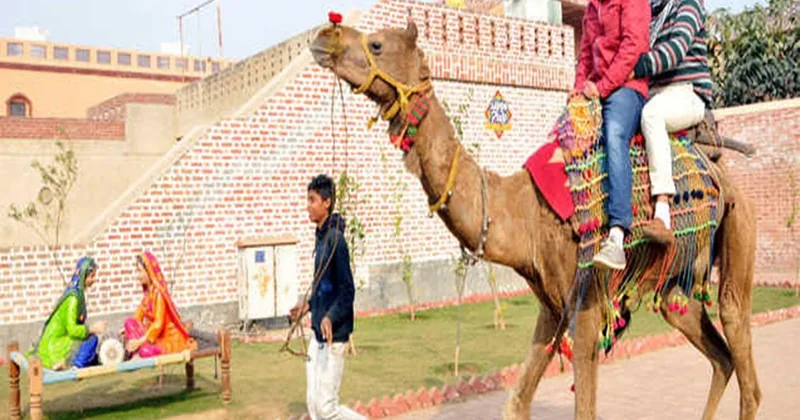
A Punjabi village evening
The temple shows you Sikh Amritsar. For a lighter evening after a long day, Sadda Pind, a village
resort a short drive from the city, shows you rural Punjab: its dances, its food and its farm life.
Sadda Pind Village Evening with Dinner
★ 5.0 · 2 reviews · GetYourGuide
After the temple, a different side of Punjab: a village resort a short drive from the city, with mud houses, folk dance, Gatka martial arts, lassi churning and a Punjabi dinner of makki di roti and sarson ka saag. Hotel pickup by private car. Full refund if you cancel up to 24 hours ahead.
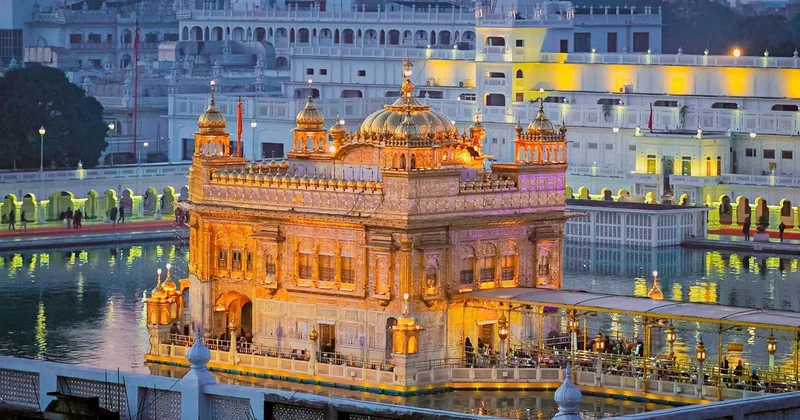
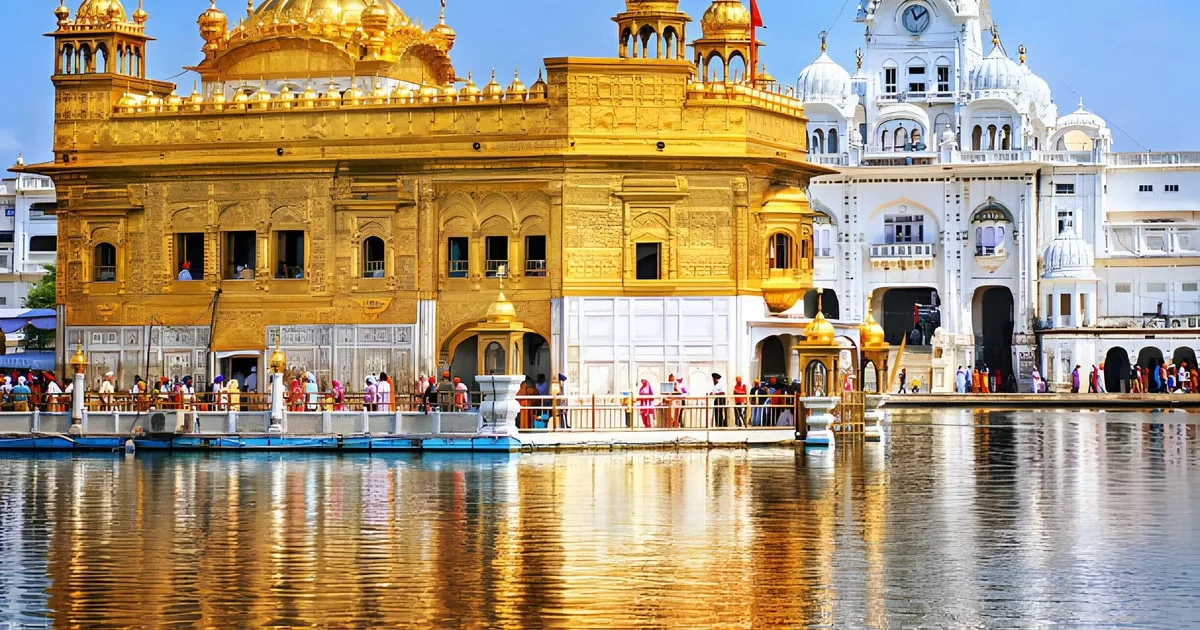
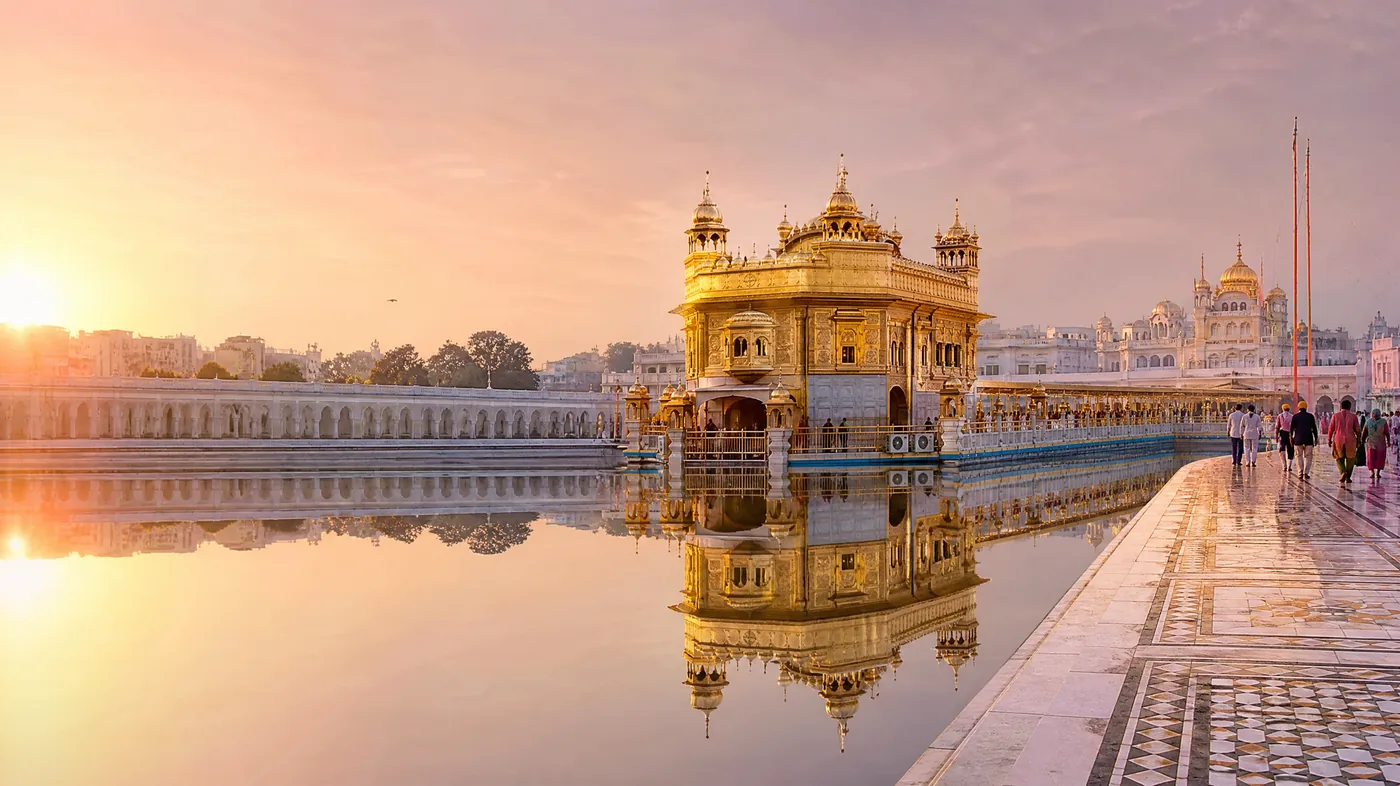
Sri Harmandir Sahib, the Golden Temple, is the holiest place of the Sikh faith. It stands in the
middle of a sacred pool, the Amrit Sarovar, in the old walled city of Amritsar in Punjab. More than 100,000 people
come on a typical day, pilgrims and travellers side by side, and there is no ticket, no booking and no closing time.
How it came to be
Guru Ram Das, the fourth Sikh Guru, began digging the pool and the town around it in 1570. His son Guru Arjan
Dev designed the temple and began building it in the 1580s; according to the SGPC, the foundation stone was laid
by the Sufi saint Mian Mir of Lahore. In 1604 Guru Arjan installed the Adi Granth, the Sikh scripture, inside. The
temple was destroyed in the 18th century and rebuilt from 1764. In the early 19th century Maharaja Ranjit Singh
had the upper storeys covered in gilded copper and then gold leaf, which is where the English name comes from. It
is not solid gold: the building is marble and copper underneath.
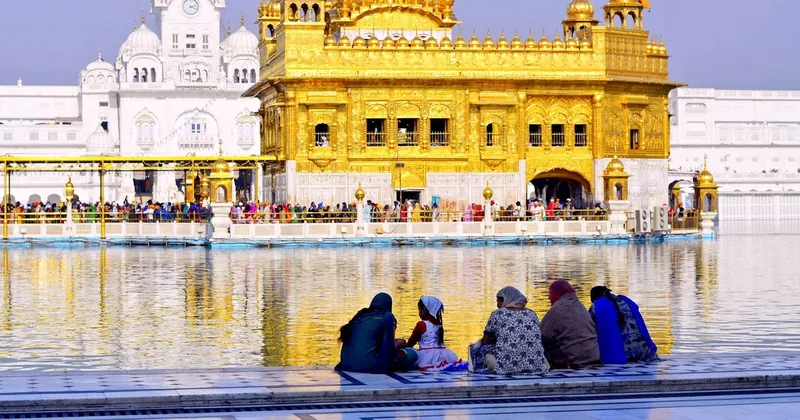
Sunrise over the Amrit Sarovar, soon after the Palki Sahib procession.
Four doors, one kitchen
The temple has a door on each of its four sides, a sign that people of every faith, caste and background are
welcome. The same idea runs the langar, the community kitchen: volunteers cook and serve a simple vegetarian meal
to everyone who comes, sitting side by side on the floor in long rows. The halls seat about 5,000 people at a time
and are cleaned between sittings, day and night. You can sit down, and you can also help: rolling rotis, serving
or washing up are all open to visitors.
The honest small print: no tour lets you skip the line to the sanctum, and none needs to
get you in: there is no ticket. A guide is worth it for the stories, the kitchen behind the scenes and the
logistics of a day that also includes Jallianwala Bagh or the border ceremony. If you only want to see the temple,
read our guides, cover your head and walk in.
A day at the temple
The sanctum doors open at about 2 am in summer and 3 am in winter, and the hymns begin. At about 4 to 5 am, the
Guru Granth Sahib is carried in a palanquin from the Akal Takht across the causeway to the sanctum: this is the
Palki Sahib procession. Kirtan continues all day. After the evening prayer, at about 9:45 pm in winter and 10:45 pm
in summer, the procession returns the scripture to the Akal Takht for the night, and the sanctum is washed. The
marble around the pool stays open throughout.
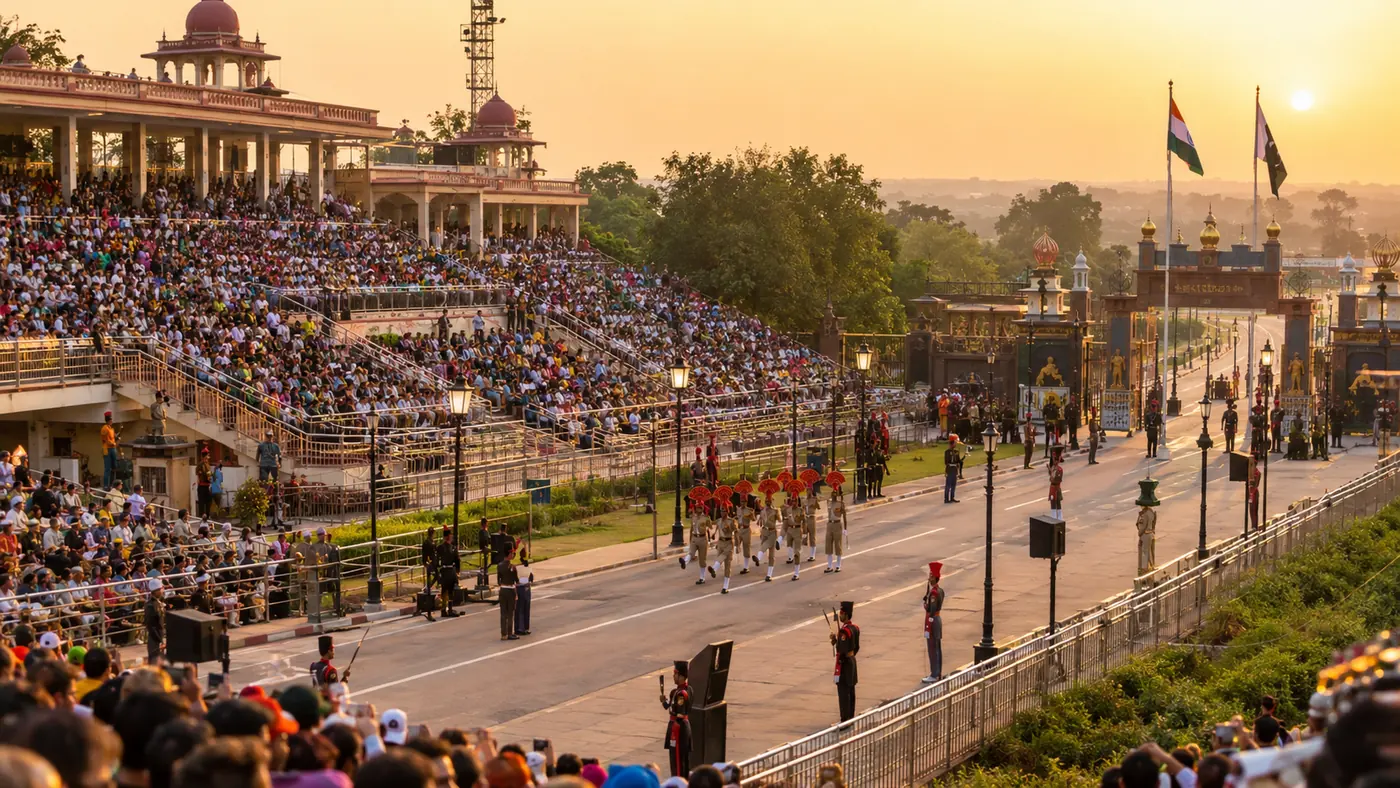
The Attari border ceremony, the usual finale of an Amritsar day tour.
Beyond the temple
Jallianwala Bagh, the garden where British troops fired on an unarmed crowd on 13 April 1919, is a few minutes'
walk away, and the Partition Museum in the Town Hall tells the story of 1947. Most day tours end at the Attari
border, about 28 km away, for the evening flag-lowering ceremony. It is held daily in a scaled-down form, with the
gates shut, and it sits inside the border strip that some governments advise against visiting, so check before you go.
What to wear, in one line
A scarf over your head, shoulders and legs covered, shoes and socks off, and nothing to smoke or drink. There
is no colour rule, so black is fine, and clean jeans are generally accepted.
Straight answers to what visitors ask most about the Golden Temple.
How much time does it take to visit the Golden Temple?
Allow two to four hours: about an hour to walk around the pool, time in the langar, and one to three hours if you queue for the sanctum. Many visitors come back a second time after dark. Queue times and the calmest hours in how long a visit takes.
Why is the Golden Temple so famous?
It is the holiest place of the Sikh faith, a gilded temple standing in a sacred pool, open to people of every faith through four doors, day and night. Its langar serves a meal to everyone who comes, tens of thousands every day, cooked and served by volunteers.
What are the rules for visiting the Golden Temple?
Cover your head, take off your shoes and socks, wash your feet at the entrance and dress modestly with shoulders and legs covered. Tobacco, alcohol and intoxicants are not allowed, not even in a bag. Every rule in the rules and dress code guide.
What happens at the Golden Temple at 3 am?
In winter the doors of the sanctum open at about 3 am and the early morning hymns begin; in summer they open at about 2 am. At about 4 to 5 am the Guru Granth Sahib is carried to the sanctum in the Palki Sahib procession. The whole ceremony in the Palki Sahib guide.
Is there a ticket for the Golden Temple?
No. There is no ticket and no booking: anyone can walk in, at any hour. Shoes are kept by volunteers at the joda ghar and scarves are available at the entrances. You pay only if you choose a guided tour.
Can I wear jeans in the Golden Temple?
Yes, clean jeans without rips are generally accepted, like any long trousers. Avoid shorts, short skirts and sleeveless tops, and bring a scarf to cover your head.
Which month is best to visit the Golden Temple?
October to March, when the days are mild; December and January mornings can be cold and foggy. April to June is very hot, and July to September brings the monsoon. Month by month in the best time to visit.
Is it safe to visit the Golden Temple now?
Yes. The temple is busy, calm and staffed by volunteers around the clock. The one area foreign governments advise against is the strip within 10 km of the Pakistan border, which includes the Attari ceremony, not the temple. Details in is the Golden Temple safe.
Is photography allowed at the Golden Temple?
Quick still photos on the marble walkway around the pool are tolerated. Videos are not allowed, and you should not take photos inside the sanctum. Follow the volunteers if they ask you to put your phone away.
Can Muslims go inside the Golden Temple?
Yes. People of every faith are welcome, and the four doors are meant as a sign of that. According to the SGPC, the foundation stone was laid by Mian Mir, a Muslim Sufi saint from Lahore.
Can I wear socks in the Golden Temple?
No. SGPC guidance asks you to remove socks as well as shoes and to walk barefoot. You hand both in at the joda ghar and wash your feet in the water channel at the entrance.
Do you need a guide for the Golden Temple?
No, but it helps. On your own you see a beautiful place; with a guide you understand it, and some tours take you behind the scenes of the langar kitchen. The tours side by side in Golden Temple tours compared.
Ready to go
Cover your head, then walk in.
Or go with a guide who knows the stories: instant mobile tickets on GetYourGuide, with the refund terms on every tour.


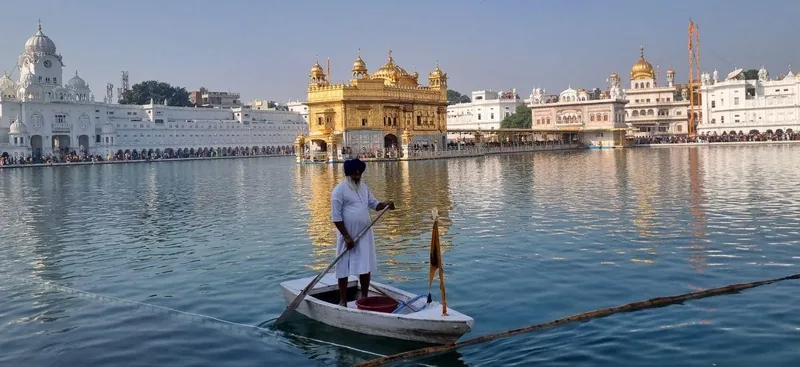 Two hours on foot
★ 4.92 hours29 reviews
Two hours on foot
★ 4.92 hours29 reviews